Why Dashboard Robots Finally Took Off in China's Cars in 2026
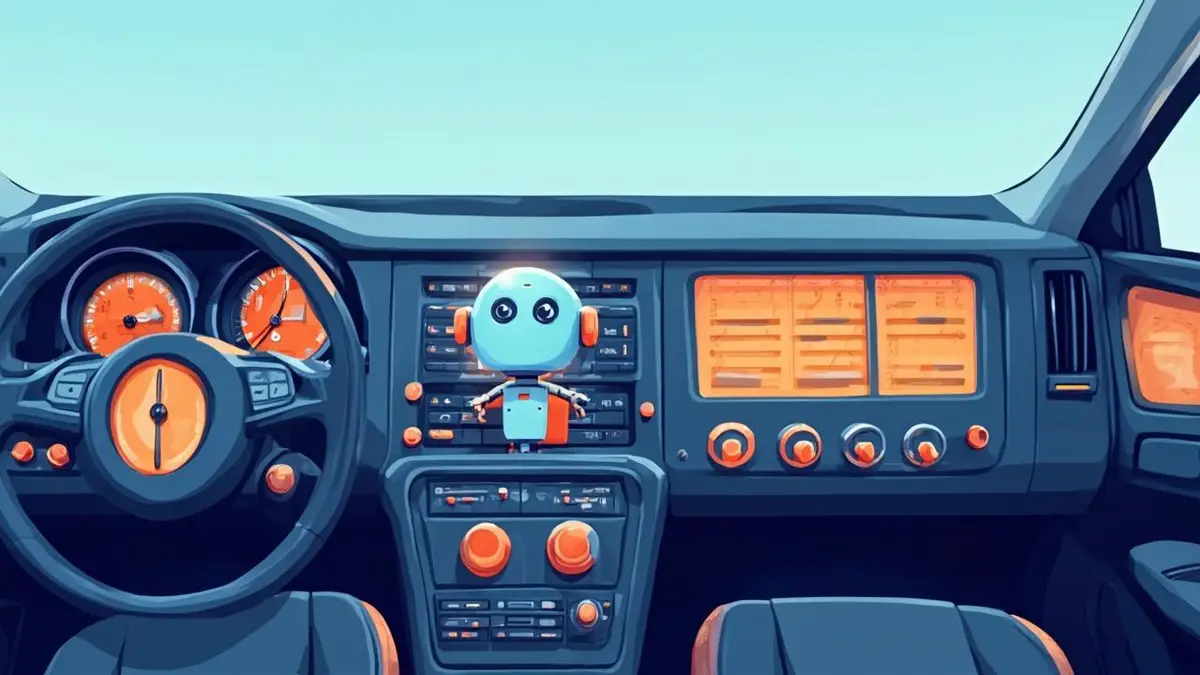
For most of the past decade, the idea of a little robot living on your car’s dashboard sounded like a novelty. Then, in 2026, it became a trend. Xiaomi’s smart display, Roewe’s Doubao screen and Geely’s Eva have all arrived with a small character that turns its head, blinks and pulls faces while you drive. A wave of aftermarket AI pets has followed, sold as add-ons for cars that never shipped with one.
The obvious question is why now. NIO’s NOMI, the round-faced assistant that sits atop the dashboard and swivels toward whoever is speaking, was unveiled back in 2017. It has been refined for years and is now one of the brand’s most recognizable design signatures. Chinese automakers are famously quick to copy a good idea, so the near-nine-year gap between NOMI and this year’s flood of imitators needs explaining.
Part of the answer is cost. A dashboard character is only convincing if it reacts quickly and in context, which means running speech and vision models locally rather than shipping every request to a distant server. The chips and software stacks capable of doing that cheaply have only recently become widely available, and Chinese suppliers have pushed prices down fast. What was a premium feature is now something a mid-market brand can afford to fit as standard.
Part of it is emotional. Chinese car buyers are shopping in the most crowded market on earth, where dozens of electric models compete on near-identical range figures and screen sizes. A robot that greets you by name, looks sad when you skip a service reminder or celebrates a road trip gives a brand a face. Executives describe it as personality, and personality is hard for a rival to copy.
There is also a quieter, more practical driver: driver monitoring. Regulators and insurers increasingly want cars to know whether the person behind the wheel is alert. A camera that watches your eyes is more palatable when it is packaged as a friendly companion than as a surveillance device. The robot’s gaze and gestures can nudge you to take a break without a stern warning chime.
Not everyone is convinced. Critics call the trend a distraction, arguing that a moving object on the dashboard competes for attention and that animated expressions are a solution in search of a problem. Others note that early versions feel repetitive after a week, and that owners quickly turn the volume down. The same complaint followed voice assistants a few years ago, and it did not stop them from spreading.
What happens next will depend on whether these characters become genuinely useful. The most promising direction is memory: a car that remembers your child’s name, that you dislike cold air, and that you always take the coastal road home. NOMI’s long head start came precisely from accumulating that kind of familiarity. If the new arrivals can match it, the dashboard robot may stop looking like a gimmick and start looking like the interface itself.
For global readers, the trend is a useful window into how Chinese automakers compete. With hardware increasingly commoditized, the battleground has shifted to software, personality and the small daily moments that make an owner feel attached to a machine. A blinking face on the dashboard is a strange place to fight that war. It may also be an effective one.