One Day, Nine New Cars: Inside China's Crowded EV Market
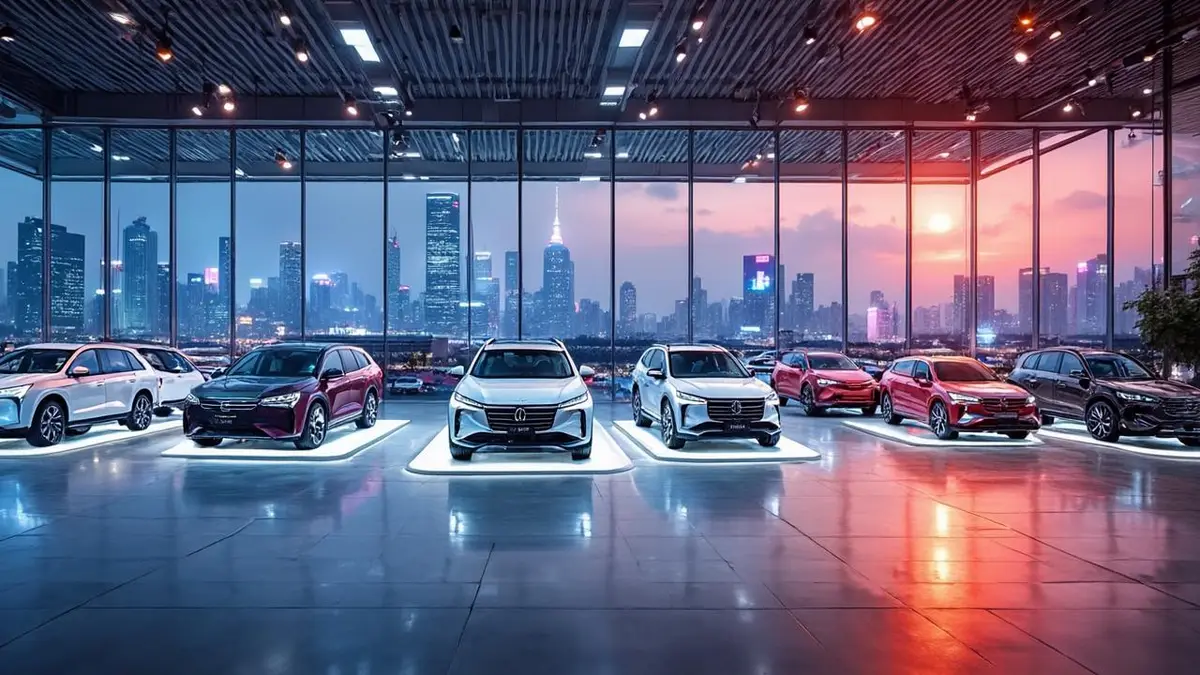
September 23 was not a national holiday, but for China’s car industry it felt like one. Nine new vehicles went on sale or opened pre-orders on that single day, according to Chinese auto media: the Qijing GX7, Changan Qiyuan Q06, Denza Z9S, a refreshed Zhiji LS6 electric version, Geely Galaxy E5, Buick Zhijing E7, Wey Mountain smart edition, Great Wall Menglong PLUS and Jetour Traveler 7. For global readers, these names may mean little, but the sheer arithmetic tells the story: China’s automakers are launching models faster than the market can absorb them.
The timing was deliberate. The day fell between the Mid-Autumn Festival and the National Day holiday, a golden window when families shop and showrooms buzz. Automakers wanted to grab attention before the fourth quarter, the final stretch of the sales year. But releasing nine cars at once also reveals a deeper anxiety. China is the world’s largest auto market, with annual passenger vehicle sales in the tens of millions, yet it now hosts dozens of brands and hundreds of models. Growth has slowed, and the fight for each buyer has turned fierce.
Consider the numbers from the China Passenger Car Association. In the first 20 days of September, retail sales of passenger vehicles reached about 878,000 units, down roughly 22 percent from the same period a year earlier, though up 8 percent from August. Cumulative sales for the year stood near 12.6 million, down about 21 percent year-on-year. The decline partly reflects the fading of subsidy programs that once pulled purchases forward, and partly a broader caution among consumers. When demand softens, a flood of new models does not expand the pie — it slices it thinner.
The product mix on that busy day shows where the industry is placing its bets. Most of the nine are electric or plug-in hybrid, spanning family SUVs, sedans and off-road-styled lifestyle vehicles. Chinese buyers have embraced electrification faster than shoppers in Europe or North America, and domestic brands now lead in battery range, in-car software and price. That advantage has made China a brutal proving ground: a model that would be a hit elsewhere can be forgotten here within months if a rival undercuts it.
Intense competition is also reshaping the corporate map. In recent weeks, Seres and Huawei adjusted their collaboration on the Aito brand, with Seres taking a larger direct role. GAC Group halted trading to plan a major asset restructuring involving FAW, a deal that could redraw alliances among state-linked automakers. Huawei’s founder Ren Zhengfei reiterated that the company will not build cars itself, but will supply intelligent driving and cockpit technology to partners such as Dongfeng. Consolidation and partnership shuffling are becoming as newsworthy as the cars themselves.
For consumers, the glut has a clear upside. Prices are under pressure, features once reserved for luxury cars — large screens, advanced driver assistance, long-range batteries — appear in ever-cheaper models, and the pace of improvement is relentless. For automakers, the same dynamic is punishing. Profit margins are thin, marketing costs are high, and weaker brands risk being squeezed out. Industry analysts increasingly describe this period as a cleanup phase, in which the field of players shrinks toward a smaller group of survivors.
Chinese cars are also looking abroad for relief. Exports have climbed for three straight years, and in mid-2026 monthly shipments topped one million units for two consecutive months. That overseas push brings its own challenges, from local regulations to building service networks in unfamiliar markets. Still, for many brands, exporting is no longer optional but essential to spreading development costs across more sales.
Back to September 23: nine launches in one day may look like a show of strength, but it is also a symptom. China’s car market is vast, innovative and unforgiving. The companies that survive the current squeeze will be those that can stand out not just with a single clever model, but with consistent quality, service and brand trust. For now, buyers are the winners — and they know it.