Orca Entertainment Launches Jingrui AI to Cut AI Video Costs 30%
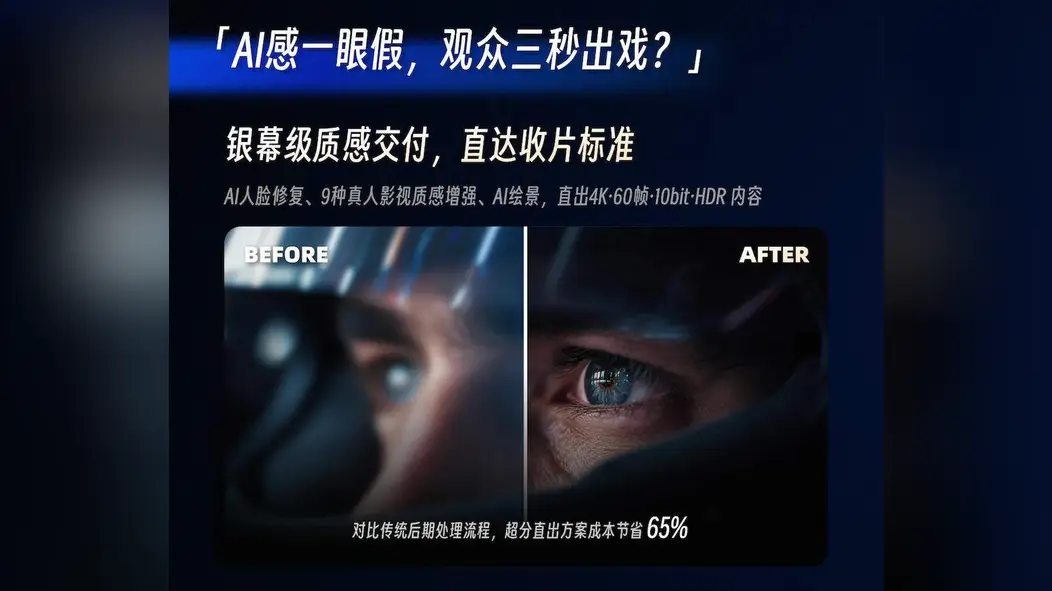
On November 4, Orca Entertainment, a Chinese film and television group, launched Jingrui AI, a platform it describes as the industry’s first AI production and management system for film and television. The pitch is not a better model but a tighter grip on the process: precise control over AI video generation, cinema-grade delivery, and costs that can be tracked and managed.
The platform aggregates more than 50 mainstream AI video generation models alongside about 10 models developed in-house. Users work on an unlimited canvas that supports thousands of nodes and real-time collaboration among dozens of people, according to the company. In practice, that means a production team can route different shots to different models, compare results, and keep the whole pipeline in one place instead of stitching together separate subscriptions and file transfers.
The headline number is the one producers care about: Orca says Jingrui AI cuts the cost of a single minute of AI video by more than 30 percent. That claim is about workflow, not raw generation. Choosing the cheapest capable model per shot, avoiding duplicated renders and keeping edits inside one system all compound. For a short drama, an ad spot or a promotional film, minutes add up quickly.
The launch lands as China’s AI video market moves from a race over model size to a fight over real production workflows. Studios have spent the past year testing text-to-video tools, but the bottleneck is rarely a single clip. It is version control, review, continuity and the cost of regenerating a shot because a hand moved wrong. A platform that treats those steps as first-class products is a different kind of bet.
Orca is not alone in seeing the opportunity. Short-drama production has become one of the most voracious consumers of AI video in China, and tools aimed at that market have multiplied. Earlier AI video offerings have focused on speed and price per clip. Jingrui AI’s angle is orchestration: many models, one interface, one budget.
There are open questions. Aggregating third-party models means the platform’s economics depend on the pricing those model providers set, and quality can vary sharply between them. Cinema-grade delivery is a high bar, and AI-generated footage still struggles with consistent faces, physics and text. The claim of dozens of people collaborating in real time also assumes the underlying generation is fast enough to keep a team from waiting.
Still, the direction is telling. As AI video tools proliferate, the value is shifting toward whoever controls the production layer where models are selected, shots are approved and money is spent. Orca’s platform is an attempt to own that layer for film and television, rather than compete on the models themselves.
What to watch is adoption inside real productions. A 30 percent saving is easy to claim in a launch presentation and harder to prove across a full shoot. If Jingrui AI shows up in the credits of finished dramas and commercials in the coming months, the orchestration bet will look prescient. If it remains a demo, the market will keep buying models one subscription at a time.