China's Holiday Travelers Are Choosing Slow Mornings Over Long Queues
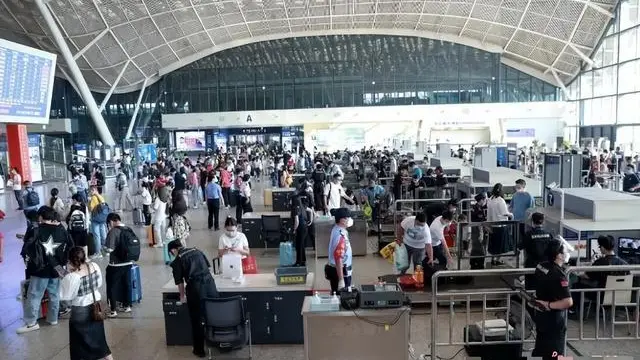
Every October, China’s National Day holiday unleashes the world’s largest wave of travelers. For years the ritual looked the same: midnight trains, selfie scrums at famous gates, itineraries packed tighter than a tour bus. This year, travel writers and social feeds tell a different story. The screenshot of the season is not a mountain summit but a bowl of noodles in a county town nobody had heard of a week earlier.
One widely shared account came from a family returning from Shandong province. What they remembered was not a scenic spot but a stranger handing them steamed buns while their car tire was being repaired on the highway, and a restaurant owner who gently talked them out of ordering too much food. Small courtesies, the writer argued, warmed the trip more than any postcard view. The piece traveled far because it matched what many travelers say they now want: to be treated well rather than processed.
Other travelers are simply staying put. On October 1, the first day of the break, posts described sleeping until noon in a hotel, wandering into a neighborhood restaurant, and calling it a day. The phrase circulating in Chinese travel writing is ‘suffering-style tourism’ — the old habit of enduring crowds and exhaustion to prove a holiday happened. Fewer people seem willing to pay for that.
Destinations are adapting. In Wuxi, a city near Shanghai known for its lake and canals, tourism officials promoted a ‘visa on arrival’ idea — no advance planning, no攻略, just show up and join whatever is happening. The city’s attractions drew nearly 150,000 visitors on the first day, with evening events growing fastest. The pitch works precisely because it removes the homework that made trips feel like work.
Cities are also building for the stroller rather than the sprinter. In Jinan, capital of Shandong and famous for its springs, a new riverside project called ‘Riverside Vitality Bay’ opened a trial section along a 1.3-kilometer waterway, with footbridges and paths linking both banks. It is the kind of everyday green space that locals use on a Tuesday, not a monument that requires a ticket and a queue.
Meanwhile, a quieter genre of travel writing is thriving: the forgotten village. One photographer documented hamlets along the border between Shandong and Hebei, where a shallow ditch separates two provinces and farmers greet each other across it while working the same fields. These places have no entrance fee and no souvenir street. Their appeal, for a certain kind of traveler, is exactly that.
The commercial picture is not one of decline. Travelers still spend, but they spend differently — on food, on a comfortable room, on a longer stay in a smaller place. Industry analysts describe a market moving from volume to quality. International cruise brands, for instance, now talk about their depth of localization after years of operating in China, because repeat customers judge a holiday by how little friction it contains.
If the pattern holds beyond this holiday, it will change what destinations build and how they market themselves. The winners may not be the cities with the most famous gate, but the ones where a visitor can arrive without a plan and still feel looked after. That is a harder thing to construct than a viewing platform, and a much harder thing to fake.