Egret Season in Gaozhou: A Chinese City's Quiet Wildlife Win
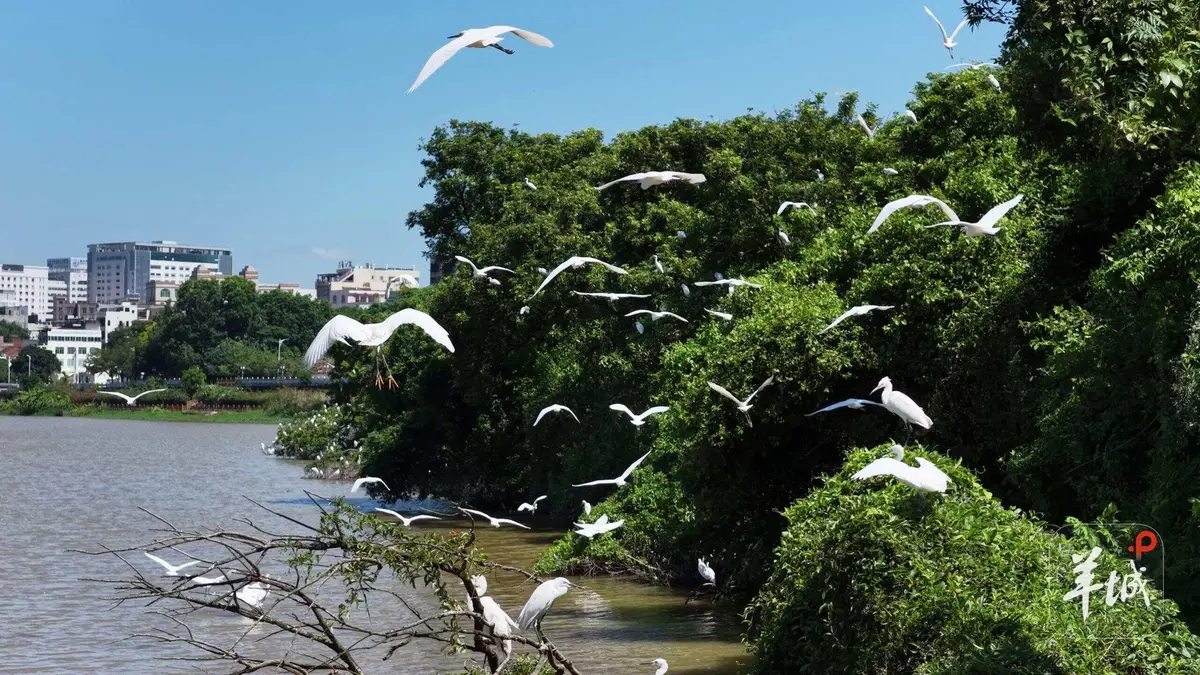
Every autumn, something white and restless moves into Gaozhou, a county-level city in western Guangdong province. Flocks of egrets arrive with the cooling weather, settling along urban riverbanks, suburban wetlands and the wooded edges of ponds. Locals out for an evening walk near Baoguang Pagoda have been stopping mid-step this season as the birds skim low over the shallows, then stand motionless in the water, waiting for fish.
The egret is not a rare species in southern China, but its willingness to feed inside a built-up city is. Egrets are skittish, and they vote with their feet: where water is polluted or banks are crowded with concrete, they simply do not land. Their arrival in Gaozhou’s rivers and wetlands has been read locally as a report card on years of work on sewage treatment, riverbank restoration and wetland protection. The birds come for the fish, and the fish come for cleaner water.
What makes the scene unusual is how the city has handled it. Rather than fencing the birds off or charging admission to a viewing spot, Gaozhou has largely let residents and visitors watch from the paths they already use. During the National Day holiday in early October, people near Baoguang Pagoda kept running into the flocks by accident. The etiquette that emerged was self-imposed: stop, keep a distance, photograph quietly, move on. No drones, no chasing, no feeding.
That restraint matters, because the relationship between wildlife and tourism in China is not always so gentle. This autumn, state broadcaster CCTV exposed a case in Inner Mongolia where a lake inside an ecological protection zone had been commercially developed with tickets, restaurants and amusement rides. The contrast is instructive. A natural landscape can be protected and still be enjoyed; it can also be wrapped in turnstiles and repackaged as a paid attraction, at which point the wildlife that drew people there in the first place tends to leave.
Gaozhou’s egrets sit at the healthier end of that spectrum. The birds are a seasonal event, not a ticketed product. Local tourism has benefited indirectly: photographers and birdwatchers extend their stays, and guesthouses in the surrounding countryside see autumn bookings. But the main audience is ordinary residents, who treat the egrets as part of the neighbourhood rather than a spectacle requiring an entrance fee.
There is a practical lesson here for other small Chinese cities trying to build travel revenue without concrete. Wildlife is a fickle asset. It cannot be scheduled, branded or guaranteed to appear for a holiday crowd. What a city can control is habitat: water quality, undisturbed shallows, trees left standing along the bank. Do that, and the egrets return on their own schedule, year after year.
For international visitors, Gaozhou is not yet a headline destination. It sits in Maoming, a coastal prefecture better known for lychees and petrochemicals than for birdwatching. That may be the point. Some of the most rewarding travel in China now happens in places that never made it onto a must-see list — a riverbank at dusk, a flock of white birds settling onto the water, and a city that decided the view was worth protecting rather than selling.
Autumn is the season to see it. The egrets will stay while the weather holds, then move on. Gaozhou’s job is to make sure there is somewhere for them to come back to.