A Chinese Chipmaker Bets 700 TOPS That Big Models Will Drive Cars
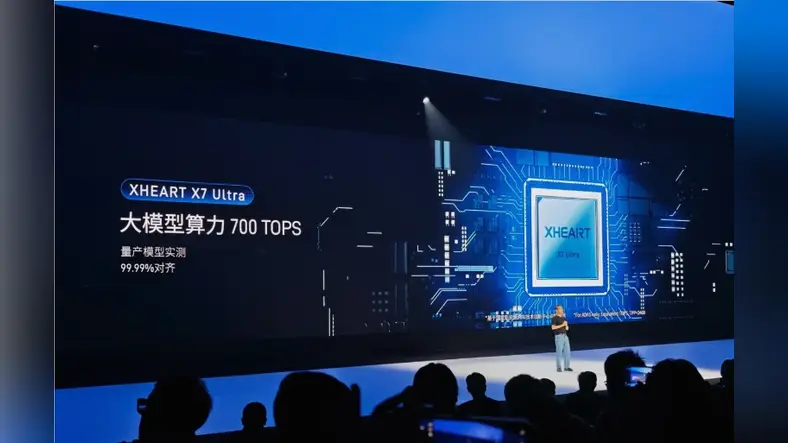
Most chips inside today’s smart cars were designed for a world of many small, specialized models: one for lane detection, one for pedestrians, one for traffic signs. XHEART, a Chinese startup whose English name is XHEART and whose Chinese name is pronounced roughly “xin xin hang tu,” is betting that era is ending. On October 29 it launched the X7 Ultra, a chip built from the ground up for the kind of single, large end-to-end driving model that many carmakers now say they are moving toward.
The company’s guiding idea is simple to state and hard to execute: let the model define the chip. Rather than starting from a list of conventional components, XHEART says it worked backward from what real, mass-produced large models demand, redesigning the compute architecture, the memory scheme and the way data moves between them. It also left headroom for models that keep growing after the chip ships.
The headline figure is 700 TOPS, a measure of how many trillion operations per second the chip can handle for large-model workloads. That number puts it in the conversation with the most powerful driving chips on the market, though raw throughput rarely tells the whole story in a car, where power draw, heat and cost matter as much as peak speed.
XHEART also points to a milestone it frames as a Chinese first: the X7 Ultra carries an Armv9 automotive-grade CPU, the latest generation of the processor architecture that underpins most of the world’s mobile and embedded computing. Automotive-grade means the part is qualified for the temperature swings, vibration and long service life a car demands, a tougher bar than consumer electronics.
The launch is not a cold start. XHEART says the X7 family has been in mass production for eight months, with cumulative shipments above 200,000 units. Those chips already appear in ten production car models, and the company says it holds orders covering more than 40 models. That installed base is the strongest argument it can make to carmakers weighing an unfamiliar supplier against better-known names.
The timing reflects a broader shift in China’s automotive supply chain. As driving software consolidates from dozens of narrow models into a few large ones, the hardware that runs them has to change with it, and Chinese chip designers are racing to supply that transition rather than the previous generation. The pitch is less about one impressive specification than about being designed for where the software is going.
What remains unproven is whether end-to-end driving models deliver on their promise in real traffic, and whether a startup can hold its ground as larger chipmakers respond with their own automotive lines. XHEART’s answer is essentially to move first and ship volume early. Whether the 40-plus model orders convert into cars on the road will be the real test of the strategy.