DeepSeek's Whale Mascot Becomes a Youth Subculture of Its Own
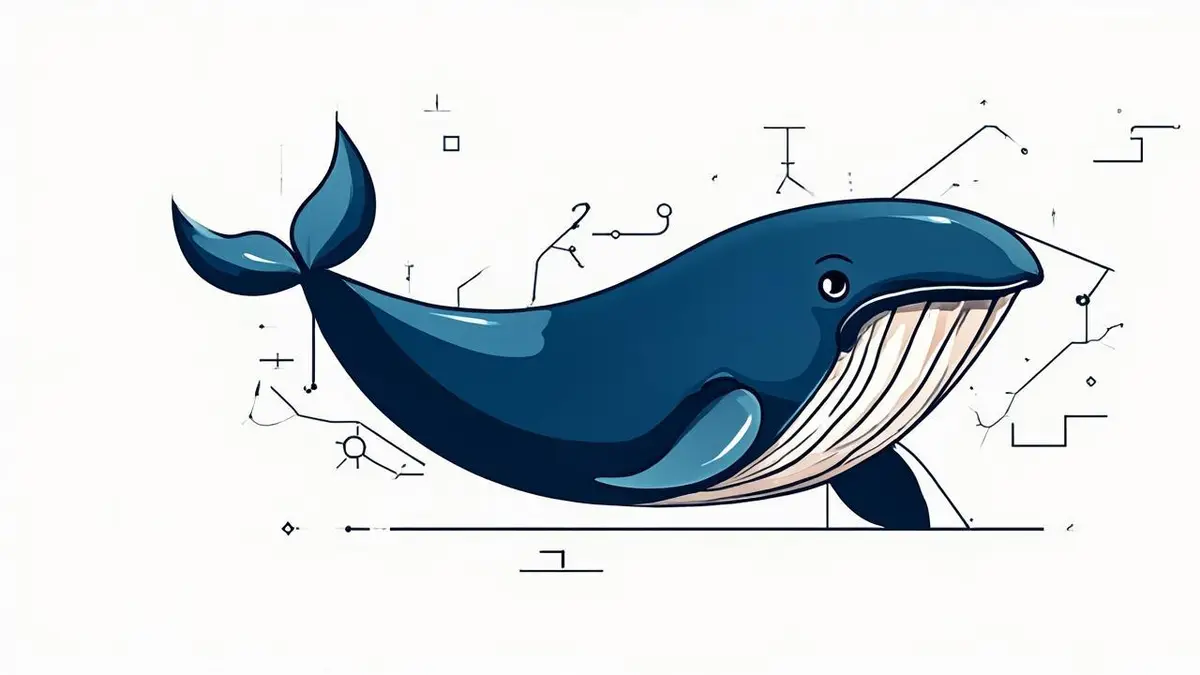
DeepSeek may be one of China’s best-known artificial intelligence companies, but online it has quietly split into two entities. The first is the one that makes headlines: a large language model developer that recently open-sourced an inference framework and completed a new funding round, with speculation about a future listing a constant talking point in tech circles.
The second lives mostly among young people, and it has almost nothing to do with model benchmarks. It is a fan-made character universe built around the company’s whale logo. Users have nicknamed the brand da fei yu, or big fat fish, and from that nickname a cast of anthropomorphic figures has grown: a whale girl in a maid outfit, an adult man in a suit wearing whale-shaped headphones, and a rotating gallery of other personas drawn, written and role-played by fans.
This is a familiar pattern in Chinese internet culture, where popular brands are frequently absorbed into secondary creation, the local term for fan fiction, fan art and remix work. What makes the DeepSeek case notable is the subject. Most brands that attract this treatment are consumer products, games or idols, not enterprise-facing AI tools. A model quietly doing code generation for developers has become, for a younger crowd, a mascot to dress up and write stories about.
The appeal appears to be partly accidental. A whale is a friendly, rounded shape, easy to draw and easy to anthropomorphize, and the name DeepSeek lends itself to wordplay. Fans have layered personalities, backstories and relationships onto a logo that was designed for a corporate website. The result is a stream of illustrations and short fictional scenes that circulate on social platforms with no promotional intent behind them.
There is a commercial logic here that the company has not visibly chased. Cultural proximity of this kind is hard to buy. Brands spend heavily to be seen as approachable, and a mascot that young users adopt voluntarily carries a warmth that advertising rarely achieves. Whether the company leans into it, ignores it or gently polices it is an open question, and each option carries risk: too much official involvement can cool a fan movement, while too little leaves the brand’s image in hands it does not control.
The split also says something about how AI is being absorbed into daily Chinese life. For developers, these are tools measured in tokens and latency. For teenagers, they are characters with outfits and personalities, sharing space with anime, games and other fandom. The same product can be a workhorse and a toy depending on who is looking at it.
For global observers, the lesson is that China’s AI race is not only a story of chips, funding and model releases. It is also a cultural story, in which the companies building the technology become material for the internet’s creative economy. The next signal worth watching is whether the whale characters stay a niche hobby or start appearing in merchandise, official campaigns and collaborations, which would mark the moment a fan joke turns into brand strategy.