AI Short Dramas Are Minting Virtual Idols, and Brands Are Paying Attention
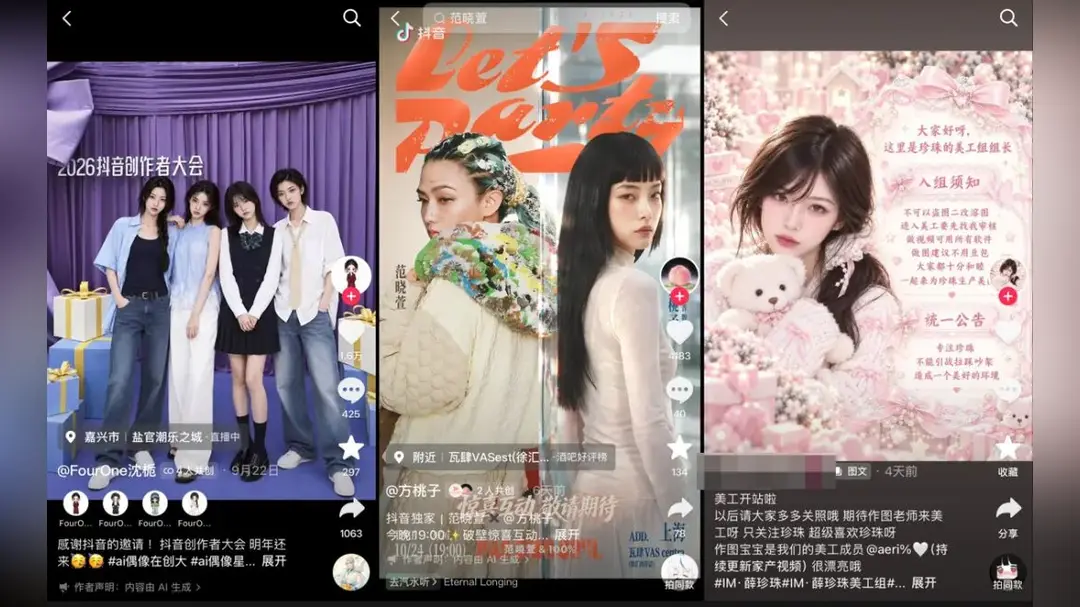
China’s short-drama industry has spent the past two years learning to make shows faster and cheaper with artificial intelligence. Now it is discovering a side effect nobody planned for: the shows are producing stars. Not actors who happen to appear in AI-assisted productions, but entirely fictional performers who release songs, collect followers and sign advertising deals as if they had walked off a reality-TV stage.
The clearest example is Shen Zhi, the centerpiece of an AI short drama called NOVA. According to reporting on the format, Shen Zhi is presented as a girl-group idol who debuts at the very top, with a lead single titled Hao that drew more than 100,000 likes on a music app. She has built a following of roughly 39,000 on Douyin, the Chinese version of TikTok, and has reportedly picked up a commercial booking for a Mao Geping cushion compact — a real cosmetics brand paying a performer who does not exist.
The backstory written for her is, if anything, more melodramatic than anything a human talent show would dare script. In the show’s fiction, Shen Zhi’s earlier life saw her personally propel a close friend to the top of the industry, a plotline that borrows the betrayal-and-comeback grammar of real idol competition shows. The difference is that every frame of it was produced with generative tools rather than a camera crew, a dressing room and a dormitory full of trainees.
That economics explains the rush. Short dramas — vertical, mobile-first series that run to dozens or hundreds of minutes-long episodes — already became one of China’s most efficient content businesses because they are cheap to shoot and sold episode by episode. AI tools push the cost lower still, and they remove the constraints that normally limit how many stars an industry can create: no scheduling conflicts, no salary negotiations, no scandals, no aging. A studio can launch a roster of idols the way a consumer brand launches flavors.
For advertisers the appeal is obvious and slightly unsettling. A virtual idol is a controllable spokesperson with a built-in narrative and an audience that already feels it knows her. The reported cosmetics deal suggests brands are willing to treat these characters as ordinary influencers, buying placement in the same way they would with a human creator. Whether audiences respond the same way over time is the open question. Followers of a fictional idol are, in effect, fans of a production team’s writing and animation rather than of a person’s charisma, and that loyalty may not survive a change of studio or a drop in output quality.
The wider short-drama market is already crowded and volatile, with thousands of titles competing for the same scrolling attention and production budgets swinging wildly. Virtual stars offer one way to stand out: a recognizable face that can appear across multiple series, sing, and post between releases. They also raise familiar questions about disclosure, since viewers are not always told that the performer they are watching was assembled rather than filmed.
What happens next likely depends on whether the first cohort of AI idols can hold an audience past the novelty of the format itself. If a virtual singer can chart a song or carry a brand campaign on the strength of her following rather than the curiosity of the moment, the short-drama business will have found a new export: not just shows, but celebrities with no off-screen life to manage.