The Complicated Afterlife of a Chinese Pop Legend
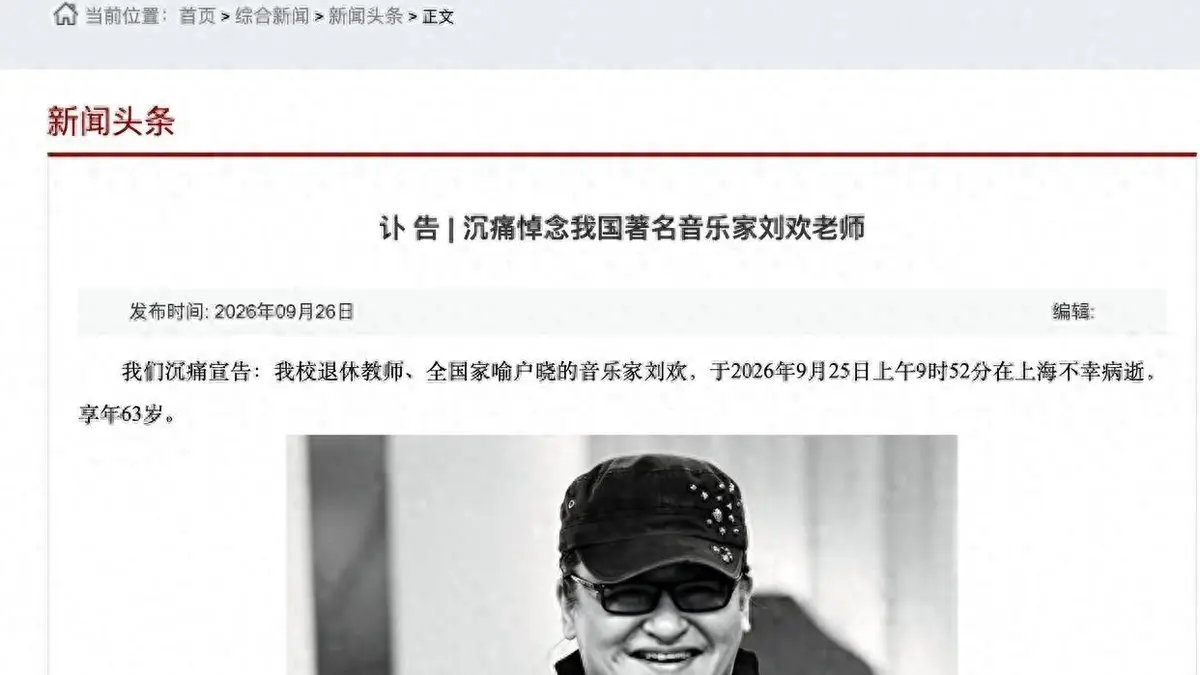
When singer Liu Huan died in Shanghai on September 25 at the age of 63, the tributes came from every corner of Chinese entertainment. Within four days, so did something else: a wave of articles digging through the private life he had spent decades keeping quiet.
For global readers, Liu was one of the defining voices of Chinese pop. His 1990s hits were sung at weddings, school assemblies and karaoke nights, and his English-language performances made him one of the few Chinese singers of his generation known outside the country. He was also, for more than three decades, a professor at the University of International Business and Economics in Beijing — a role he often said mattered more to him than fame.
That dual identity is central to why his death landed so hard. Chinese audiences are used to celebrities who are primarily brand properties. Liu was unusual in being both a mainstream star and a working academic, and reports after his death noted that he had asked for a simple funeral with no public memorial. He had reportedly struggled for years with a leg condition that limited his mobility in later life.
The most striking moment of the past week came not from an official statement but from singer Wei Wei. The two had been close early in their careers, and gossip about a falling-out had circulated for years. Her short post — addressing him by an intimate nickname rather than a formal title — was read by many fans as a quiet correction to that story. It spread quickly, in part because it was so plainly unpolished compared with the usual carefully drafted celebrity eulogy.
The speed of the retrospective coverage has also drawn criticism. Within days, outlets were publishing timelines of his health, his family arrangements and his teaching career, much of it aggregated from old interviews rather than reported fresh. Commentators noted the contrast between Liu’s own preference for privacy and the appetite of the attention economy he had spent a career feeding.
There is a broader pattern here. Chinese entertainment has spent 2026 cycling through scandals involving veteran performers — livestream sales controversies, leaked recordings, and accusations traded in public. Against that backdrop, a death that produced genuine, unforced grief stood out. Fans gathered outside concert halls and left flowers; streaming numbers for his older songs climbed sharply.
What remains is the music. Liu’s catalogue sits at a particular intersection: folk-inflected ballads, big television theme songs, and crossover work designed for audiences who did not speak Mandarin. For listeners outside China, it is one of the more accessible entry points into mainland pop of the 1990s and 2000s.
His death is unlikely to end the debate about how much of a public figure’s private life belongs to the public. But the response from fans — and from one old friend with three words — suggests that for many, the answer was simpler than the coverage implied.