China's Holiday Gala Shifts the Spotlight From Stars to Scientists
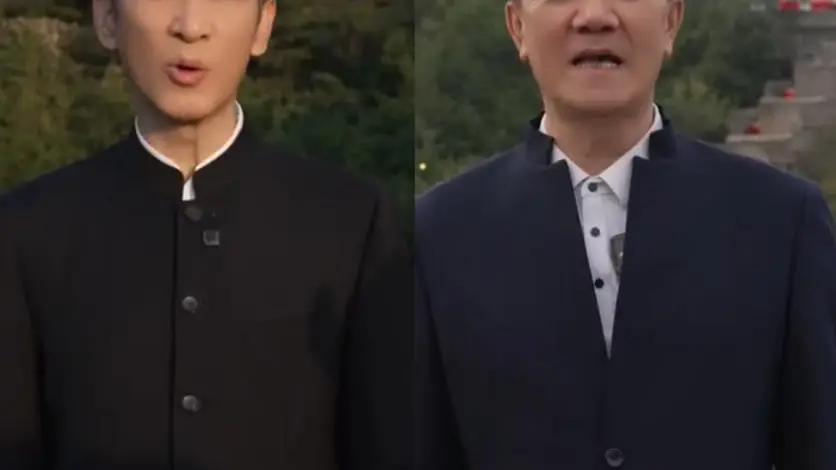
Every October 1, China’s biggest broadcasters roll out a National Day gala, and for years the formula was simple: pack the running order with the country’s most-followed singers and actors. This year’s edition kept the familiar faces but rearranged the furniture around them, and viewers noticed.
The headline slot went to Xiao Zhan, one of China’s most popular young singer-actors, who performed a solo rendition of “My Motherland and Me,” a patriotic standard most Chinese viewers can hum from childhood. Zhou Bichang, a veteran pop singer, and William Chan, a Hong Kong-born actor and performer, also appeared. On paper, the star power was intact.
What changed was the spine of the show. Academician Ben De, a radar and electronics researcher, appeared alongside Ma Shanxiang, a widely praised grassroots mediator from Chongqing, plus frontline scientists, community representatives and military personnel. Instead of serving as brief interludes between musical numbers, these guests carried extended segments of their own.
Chinese entertainment commentators seized on the contrast. Several articles argued that a national occasion demands more than follower counts — that performers should be able to speak clearly, carry themselves well and connect with an audience beyond their fan base. One widely shared piece contrasted a carefully worded on-camera interview given by Xiao Zhan on the Great Wall with clips of other idols stumbling over basic characters and rehearsed answers, framing it as a lesson in preparation.
The debate has a longer tail. China’s celebrity industry has spent years debating the limits of liuliang — literally “traffic,” the fan-driven attention economy that can turn a performer into a brand overnight. Regulators and state media have repeatedly nudged the industry toward substance over hype, and mainstream broadcasters have gradually rebalanced their lineups. The National Day gala is one of the clearest windows into how that shift is playing out.
For the stars themselves, the message is less about exclusion than about adaptation. Xiao Zhan’s solo spot shows that top-tier popularity is still welcome. But the space around him now belongs to people whose fame comes from laboratories, courtrooms, farms and barracks — figures whose stories are harder to manufacture and harder to ignore.
Audiences responded in familiar fashion, with clips circulating on short-video platforms and comment sections splitting between fans defending their favorites and viewers praising the broader mix. Rating battles aside, the conversation itself is telling: a variety show built around a national holiday is being read as a statement about who deserves the country’s biggest stage.
That reading may be generous. Broadcasters juggle ratings, sponsorship and scheduling like any commercial operation, and patriotic programming has always blended pop appeal with civic messaging. Still, the direction of travel is visible. When a gala’s most-discussed moments involve a radar scientist and a neighborhood mediator rather than a chart-topping single, the definition of a headline act has quietly moved.
For global observers trying to parse Chinese popular culture, the takeaway is that the country’s entertainment calendar is not simply a mirror of streaming charts. It is also a negotiation between commercial fandom and public expectations — one that plays out most visibly every October, in prime time, in front of hundreds of millions of viewers.