Why Chinese Readers Argue the Ming Dynasty Covered Up
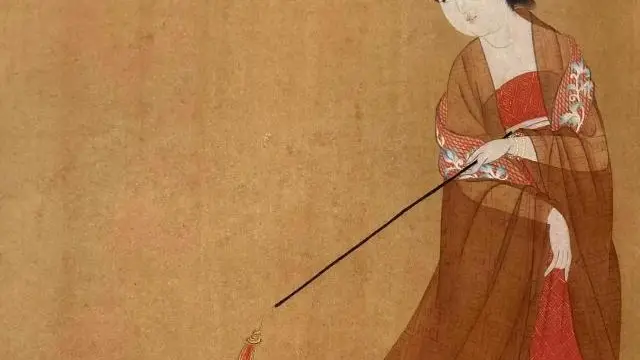
A question circulating in Chinese reading communities asks something that has puzzled plenty of newcomers to hanfu, the movement to revive traditional Han Chinese dress: why do Tang and Song dynasty styles leave the neck and collarbone bare, while Ming dynasty clothing appears to cover almost everything?
The short answer, according to the widely shared explainer, is that modern hanfu is mostly modeled on formal ceremonial dress, not on what people actually wore around the house. Formal robes were designed to project dignity and rank, so they wrapped the body tightly and layered fabric over the chest and throat. That is not the same as everyday clothing, and the difference matters.
The evidence comes from painting. In a Ming picture titled “Enjoying Summer in the Lotus Pavilion,” a wealthy young woman rests in a garden pavilion with only a red cloth draped over her belly, her chest exposed. The explainer treats this as an extreme case rather than the norm, but it shows how loose the rules could be in private, and how much skin a hot summer day could justify.
For the more ordinary picture, the author points to the “peddler” genre, a popular subject in Ming painting that shows street vendors, their goods and the families who bought from them. In one spring scene, both a humble peddler and well-dressed children wear short-sleeved gauze garments rather than anything wrapped tight to the neck. Spring, not midsummer, is the setting, which makes the light clothing more telling still.
The broader point is about how clothing gets read. A dynasty that lasted nearly three centuries produced everything from imperial court regalia to farmers’ work clothes, and the surviving formal pieces tend to be the ones that got preserved, catalogued and copied by later revivalists. Modern hanfu designers, working from museum pieces and portraits, often reproduce the most formal end of that range and then generalize it into a national style.
That has practical consequences for a movement that has grown from a niche hobby into a visible presence on Chinese streets, in photography and at festivals. If the reference wardrobe is mostly ceremonial, everyday hanfu can start to feel stiff and hot, and the impression forms that historical Chinese dress was uniformly restrictive, especially for women.
Paintings of peddlers, children and women at leisure offer a corrective. They show a society that dressed for weather and work, with gauze, short sleeves and open necks appearing well before modern air conditioning made comfort a design goal. The same tension shows up in debates over other periods, where what survives in tombs and temples is rarely what was worn to market.
The question now is whether revival designers will keep reaching for the ceremonial silhouette or start mining those genre paintings for cut, fabric and ease, which is where the everyday wardrobe of the Ming actually lives.