Volkswagen Looks to China for the Tech It Once Sent There
For decades, the template was fixed: Volkswagen’s German headquarters designed the platforms, set the engineering standards and shipped the technology to China, where local joint ventures built cars to German specifications. That one-way street is now being re-routed.
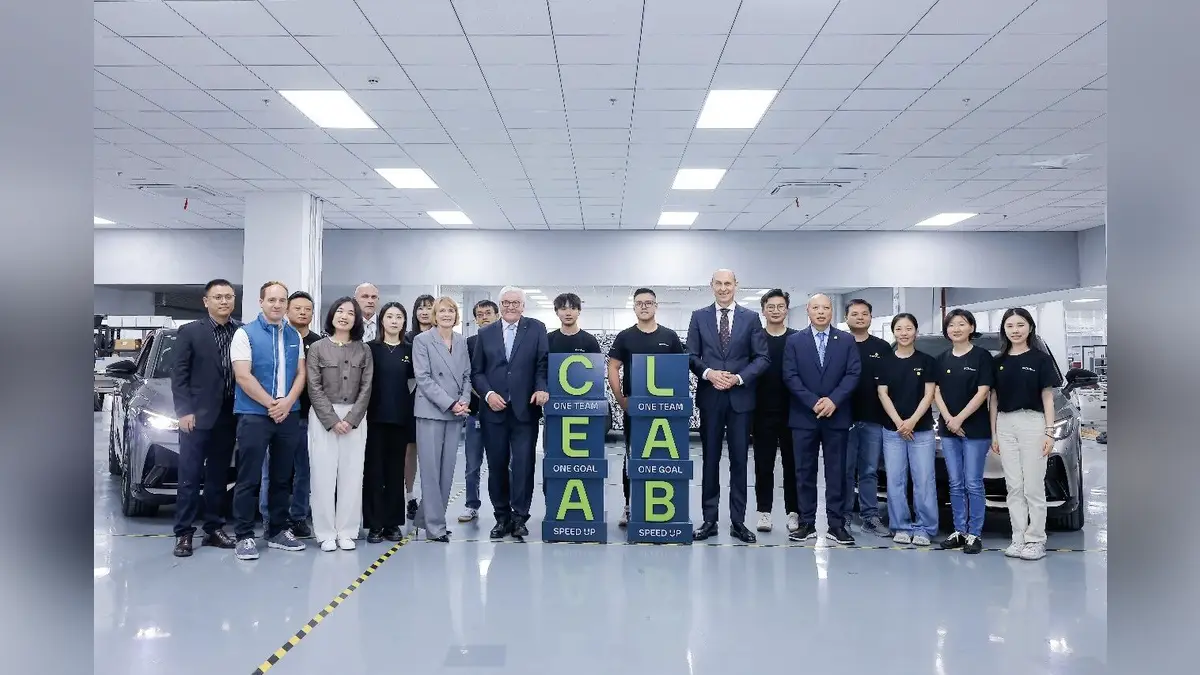
On October 27, Germany’s president, Frank-Walter Steinmeier, visited Volkswagen’s China technology company, known as VCTC, in Hefei, Anhui province. The stop was part of a visit to China, his first in nearly eight years, and the choice of Hefei was not incidental. VCTC is Volkswagen Group’s largest research and development center outside Germany, and it has become the company’s main laboratory for the software-defined vehicles that Chinese buyers now expect.
What Volkswagen is attempting is a reversal of the development flow. Instead of German engineers handing down platforms and standards to Chinese partners, the Hefei team is developing electronics architectures, software and vehicle features that will be exported back to Europe. The company has signaled that future models sold in Europe could draw on work done in China, a notable change for a group whose engineering identity was built on German design leadership.
The logic is commercial. China’s car market has become the world’s most demanding testing ground for smart cockpit features, assisted driving and rapid software updates. Local competitors refresh models in months rather than years, and consumers treat over-the-air updates and in-car apps as baseline expectations. Volkswagen’s traditional development cycles, measured in years, struggled to keep pace. Building a large software and hardware integration team in Hefei, close to Chinese suppliers and tech partners, was a way to compress those cycles.
The VCTC facility includes laboratories for integrated hardware and software testing, the kind of work that determines how quickly a car’s digital systems can be validated and shipped. By locating that capability in China, Volkswagen can tap local chip, sensor and software supply chains that are already geared to fast iteration.
The shift carries risks. European engineering teams may see their influence reduced, and integrating China-developed software into vehicles sold in Europe raises questions about data handling, regulatory compliance and supplier relationships. Volkswagen must also ensure that technology tuned for Chinese roads and user habits translates into products that appeal to European drivers, whose expectations around privacy and driving behavior differ.
For global readers, the Hefei visit is a marker of how far the balance has tilted. China is no longer only the world’s largest car market and manufacturing base; it is increasingly a source of vehicle software and electrical architecture. Western automakers that once treated China as a sales destination are now treating it as a development center whose output can serve their home markets.
The next signal to watch is whether Volkswagen names specific European models whose software or platforms originate from Hefei. That would turn a strategic intention into a product decision, and show how far the reverse flow of automotive technology has actually traveled.