China's JAC Motors Confirms Talks With Huawei and Stellantis
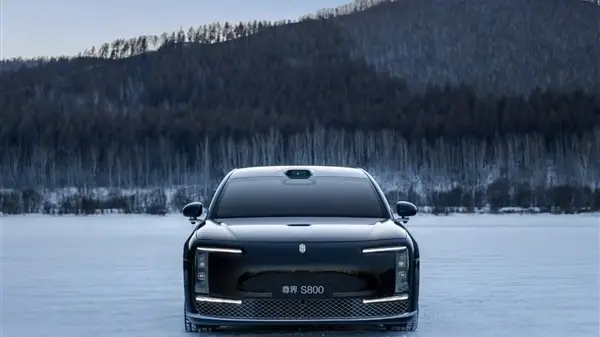
One of China’s quieter automakers suddenly found itself at the center of the market’s attention this week. JAC Motors, a state-backed carmaker based in Hefei, eastern China, issued a stock-exchange filing on September 30 confirming that it has held discussions with Huawei and Stellantis about a possible three-way cooperation, while stressing that nothing has been settled.
The disclosure followed a sharp run-up in JAC’s Shanghai-listed shares. The company said its stock rose more than 20 percent in cumulative deviation over three consecutive trading days — September 28, 29 and 30 — a move that under Chinese market rules triggers an abnormal-trading notice. In the filing, JAC said the three parties have a genuine intention to talk, but that the content and form of any cooperation remain undecided, and that no binding formal agreement has been signed. It also cautioned that any follow-through carries substantial uncertainty.
JAC is not a household name abroad, but it is a long-established manufacturer of passenger cars, trucks and commercial vehicles. Like many mid-sized Chinese automakers, it has been trying to reposition itself in an era dominated by electric vehicles and smart-driving software — areas where scale and software talent matter as much as factory capacity.
That is where Huawei comes in. The Shenzhen-based telecom and consumer-electronics giant has become one of the most sought-after technology partners for Chinese carmakers, supplying intelligent cockpit systems, driver-assistance software and even vehicle design under its HIMA brand. For a company like JAC, buying proven technology can be faster and cheaper than building a self-driving stack from scratch.
Stellantis, formed from the merger of Fiat Chrysler and France’s PSA Group, is one of the world’s largest automakers, with brands including Jeep, Peugeot and Citroën. It already has a joint venture history in China and has been rethinking how to compete in the world’s largest car market, where local electric-vehicle makers have taken a large share from foreign brands.
A three-way arrangement would be unusual. It could pair Huawei’s software and smart-cabin technology with Stellantis’s global manufacturing and distribution reach, while JAC provides local production capacity. Analysts have speculated about such combinations as foreign automakers look for faster routes to competitive electric and software-defined vehicles in China. But the filing itself offers no detail, and the company explicitly declined to confirm any structure.
The episode also illustrates a broader pattern in China’s auto industry: rumors of partnerships with Huawei have repeatedly moved share prices before any formal announcement. Investors treat a Huawei link as a signal of technological credibility, and the company’s partner roster has expanded across several state-owned and private carmakers in recent years.
For global readers, the takeaway is less about a confirmed deal than about direction. Chinese automakers are increasingly willing to buy technology rather than build everything in-house, and global players are looking for local partners to stay relevant in the world’s most competitive electric-vehicle market. Whether JAC, Huawei and Stellantis eventually sign something concrete, the talks themselves show how the industry’s lines are being redrawn.