China's Carmakers Stop Chasing Tesla and Start Targeting Xiaomi
For years, the default move for a Chinese electric-vehicle launch was to aim at Tesla. A new sedan or SUV would be wheeled out with a slide comparing its range, acceleration or screen size to a Model 3 or Model Y, and the phrase “Tesla killer” would do the rounds in the trade press. That framing now looks dated. In the crowded 200,000 to 300,000 yuan band — roughly $28,000 to $42,000 — the car companies are lining up against a different target: Xiaomi.
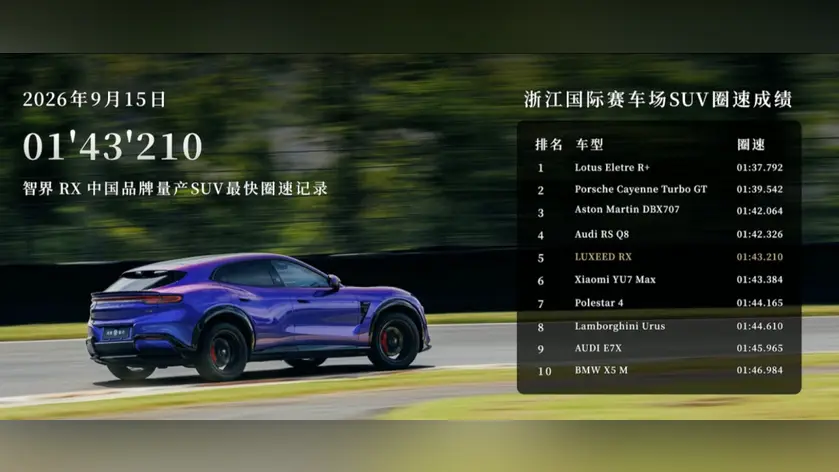
The shift is visible in how executives talk. Zhao Changjiang, an executive director at Luxeed, the EV brand Chery builds with Huawei, wrote in an online comment that the RX had beaten the YU7 Max — a direct comparison to Xiaomi’s SUV. At Volkswagen’s Anhui sales company, chief executive Liu Zhanshu said in an interview that the brand’s upcoming model, the 09, would be measured against both the Xiaomi SU7 and Tesla’s Model 3. Neither remark was a slip; both were marketing choices made in public.
The reason is scale. Xiaomi only entered the car business recently, but its SU7 sedan and YU7 SUV turned into volume sellers almost immediately, helped by a phone-and-appliance customer base that already trusts the brand and a retail network that was in place before the first car shipped. For a rival launching in the same price bracket, Xiaomi is no longer an upstart to be ignored but the benchmark buyers actually cross-shop.
The old Tesla comparison carried a certain prestige. Matching Elon Musk’s company implied engineering credibility and global ambition. Measuring yourself against Xiaomi signals something more grounded: a fight over Chinese family budgets, screen interfaces and the seamless handoff between a phone and a car. Xiaomi’s pitch has always been less about raw performance than about a connected ecosystem, and competitors are now answering on that terrain.
The shift also says something about Tesla’s position in China. It remains a major seller, but it is no longer the automatic yardstick for every new entrant. As local brands pile into the mid-premium segment with ever more models, the reference point that matters to a Chinese buyer is the car parked next door, not the one from California.
There is a risk in the strategy. Naming a competitor in public hands it free attention, and a comparison that backfires can make the challenger look smaller. The companies doing the benchmarking are betting that proximity to the category’s hottest name is worth more than the risk of being seen as a follower.
What happens next will depend on whether the comparisons translate into orders. The 200,000 to 300,000 yuan segment is where Chinese families trade up, and it is getting more crowded with every launch season. If Xiaomi keeps setting the agenda there, expect more launch decks in which the Tesla slide is quietly replaced.