China's Film and TV Industry Confronts On-Set Consent
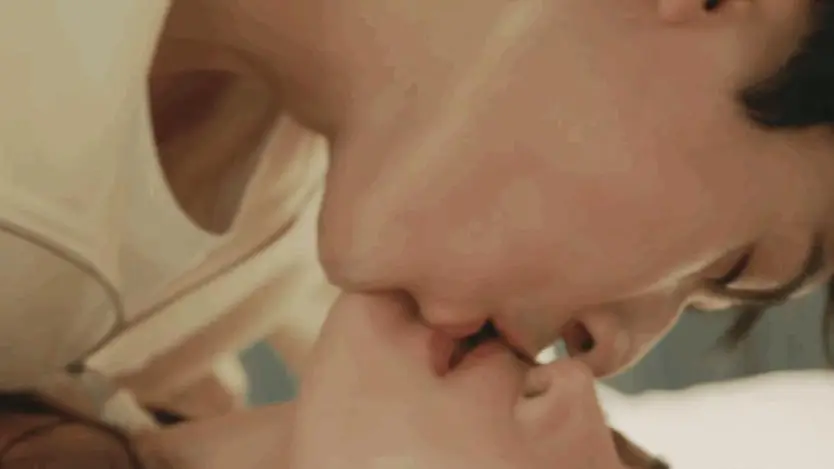
A young actor’s account of an unwanted on-screen kiss has reignited a long-simmering conversation in China about what really happens when the cameras roll. Zhong Yufei, a performer in the booming short-drama industry, said earlier this year that during a shoot his co-star, who was also the project’s investor, pushed her tongue into his mouth and spat at him. He was new to the business; she was paying the bills. The story spread quickly online, and commenters began trading other examples they had heard over the years.
China’s short-drama sector has exploded in popularity, with hundreds of micro-drama titles filed for release in recent months alone. Episodes run a few minutes each and are designed to be watched on a phone, often for a small fee. The format’s speed and low budgets mean intimate scenes are shot fast, sometimes with little rehearsal, and newcomers are often reluctant to object. Reports in Chinese media have described productions cramming dozens of kissing scenes into a single series, more as a marketing hook than a story requirement.
Veteran viewers have long memories. They recall a classic adaptation of a martial-arts novel in which an older actor held a co-star’s face and kissed her during a scene, and a 2022 television drama in which an actor pulled an actress’s tie so roughly that it became a running joke online. These incidents were discussed for years, but rarely led to formal consequences. What has changed is that younger performers and fans now talk about them openly, using a vocabulary borrowed from workplace rights.
The practical question is who protects actors on set. In China’s film and television industry, intimate scenes are usually negotiated informally between directors, producers and performers, without the intimacy coordinators now common in Hollywood and Britain. Some production companies have begun hiring consultants for such scenes, but there is no industry-wide standard. Actors’ unions in the Western sense do not exist, and contracts rarely spell out what a performer can refuse.
Power imbalances make the issue sharper. When a co-star or producer controls a young actor’s next job, saying no can feel like career suicide. Several performers who have spoken out said they waited years, until they had enough credits to risk it. Online, the reaction has been split: some applaud their courage, while others dismiss the complaints as publicity stunts. Women in the industry face the same pressure, often more acutely, and the conversation has become tangled with the broader debate over how female celebrities are treated by the public.
The topic also touches China’s booming entertainment economy. Streaming platforms, short-drama apps and traditional broadcasters all compete for attention, and provocative scenes sell. But as the industry matures, audiences are increasingly willing to punish productions that look exploitative. A few directors have publicly said they now brief actors carefully before intimate scenes and give them the right to stop at any time, calling it simple professionalism rather than a concession.
For global readers, the takeaway is that China’s screen industry is having a workplace-safety conversation familiar in many countries, but on its own terms. There is no single reform to point to yet, no new law or union contract. Instead, the pressure is coming from social media, from actors willing to speak, and from viewers who remember. Whether that translates into real protections on set, or fades into another news cycle, is the question the industry now faces.