WeChat Turns Its Public-Account Novels Into a Short-Drama Pipeline
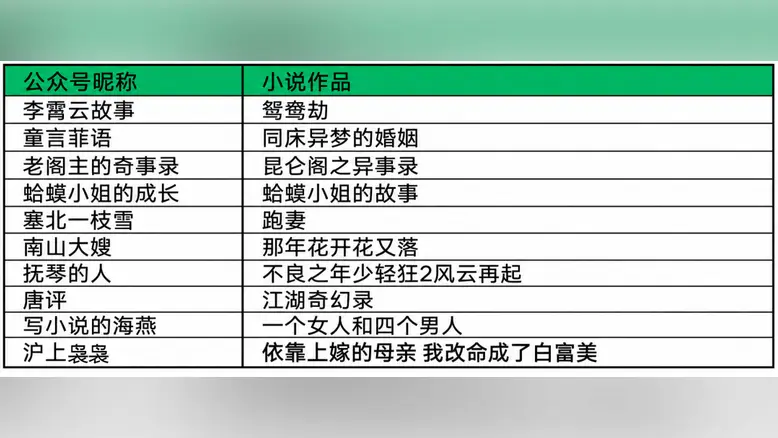
On October 19, WeChat’s open platform published a short list: ten serialized novels, among them titles such as Yuanyang Jie, Tongchuang Yimeng de Hunyin and Kunlun Ge zhi Yishi Lu. These are not books from a publishing house. They are stories that ran inside WeChat public accounts, the long-form posting tool that turned the app from a messaging service into one of China’s biggest reading surfaces.
The list was placed in front of short-drama production companies. Under the arrangement described, producers can contact the authors themselves, negotiate adaptation rights, shoot the material, and then release the finished series inside WeChat’s own video ecosystem. WeChat has also prepared extra incentives: qualifying short dramas get a 30-day priority release window on the platform.
That detail is the interesting one. WeChat already owns Yuewen, the country’s dominant online-literature company, whose catalog is the deepest mine of adaptation-ready plots in China. Yet here the platform went looking for scripts in its own public accounts instead. The likely reason is format. Public-account fiction is written for phones, in short chapters, with cliffhangers tuned to a reader who might abandon a story at any swipe. That is closer to what a two-minute vertical drama needs than a 400-chapter epic built for a different kind of reader.
China’s micro-drama industry has grown at a speed that has outpaced its supply of scripts. Producers churn through enormous volumes of content, and the bottleneck is increasingly writing rather than cameras. Studios have leaned on web novels, and more recently on AI tools to draft and adapt material. Opening a direct channel to authors shortens the chain: no agent, no studio middleman, just a writer and a producer agreeing terms.
The incentive structure tells you where WeChat thinks the value sits. A 30-day exclusive window is a meaningful head start in a market where a drama’s first days often determine whether it earns anything at all. It also keeps the audience inside WeChat rather than sending them to a rival app, which is the strategic logic behind almost everything the platform does.
For authors, the offer is a route to screen money without leaving the writing tool they already use. For producers, it is a small but curated pool of stories that have already survived the harshest test on the Chinese internet: whether readers kept tapping next. Ten titles is a pilot, not a revolution, and WeChat has not disclosed how many more lists might follow.
What makes this worth watching is the precedent. If public-account fiction can be reliably converted into short dramas, WeChat will have found a way to monetize a vast, loosely organized body of writing that has mostly generated attention rather than revenue. The next signal will be whether any of these ten actually reaches screens, and whether the authors behind them become regular suppliers to the format.