Hengdian's 388-Yuan Experiment: Tourists Become Movie Stars
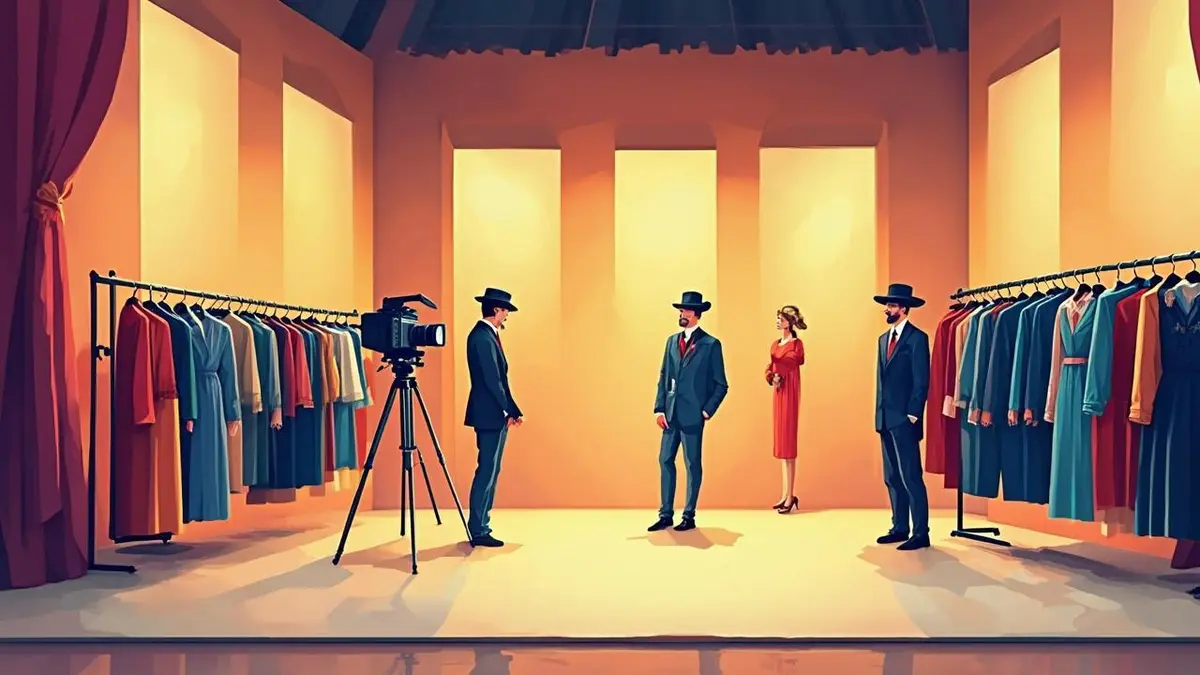
At Hengdian’s recreated Ming and Qing palace complex, a tourist from Suzhou named Huang Yanfang put on a Qing-dynasty costume and waited for her one line. Half an hour later, her short film wrapped. She had paid 388 yuan (about $55) for the experience — a package that turns an idle film set into a personal stage.
Hengdian, a town in Zhejiang province that bills itself as China’s Hollywood, has long been the country’s busiest production base for historical dramas. Its palaces, streets and courtyards are built as permanent sets, and for years they were booked solid by professional crews. On August 6, the complex said 33 vertical short-drama teams and 26 horizontal long-form dramas were filming there on the same day. A year earlier, it said, it hosted more than 150 short-drama crews a day.
The gap between those numbers explains the new business. China’s short-drama industry — cheap, fast, vertical-video series made for phones — exploded over the past few years, then cooled as platforms tightened spending and the market filled with competitors. Studios that once rented every stage now have empty soundstages and idle costumes. Rather than leave them dark, Hengdian is selling them by the hour to people who want to be the star rather than watch one.
The 388-yuan package is deliberately modest. It buys a costume, a set, a small crew and a scripted scene, with the finished clip delivered to the customer’s phone. It is closer to a theme-park ride than to filmmaking, but the ritual matters: the costume fitting, the director calling action, the wrap. For a generation raised on short videos, being on camera is a familiar pleasure, and Hengdian’s backlots offer something a phone camera cannot — the look of a real production.
The move fits a broader pattern in China’s attractions industry, where scenic spots have been looking for ways to turn passive sightseeing into participation. Tourists increasingly want to do things rather than photograph them, and studios have assets — sets, props, lighting rigs, trained staff — that are expensive to maintain and cheap to repurpose.
There are limits. A rented set is still a set, and a 30-minute shoot is not a production. Industry watchers note that the short-drama slowdown has left many small studios and crews without work, and that tourism revenue is unlikely to replace the fees a busy production calendar once brought in. The question is whether the novelty holds after the first wave of visitors has posted its clips.
For now, the experiment is a small, vivid example of how China’s screen capital is adapting to a slower market. The same backlots that once hosted emperors and concubines now host birthday trips and family outings. Whether that becomes a durable business — or a temporary patch while the industry waits for its next boom — will depend on how many people want to pay to hear a director shout action.