Ivy's Tiny Feet: How Climbing Plants Grip Walls So Hard
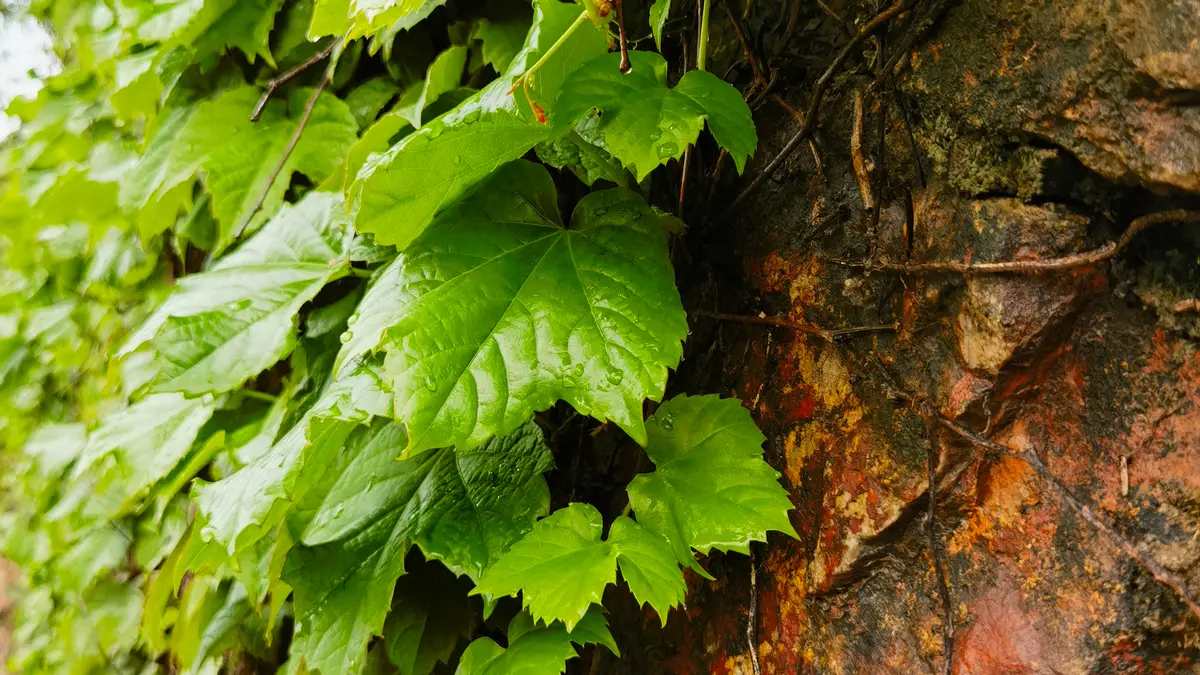
Few plants are as familiar to city dwellers as the climbing ivy, the leafy vine that turns bare brick walls into green tapestries. In Chinese it is known as pa shan hu, or ‘mountain-climbing tiger,’ and it has long been a favorite in gardens and on university campuses. Now a popular science article from ScienceNet.cn is drawing fresh attention to its most remarkable feature: the tiny ‘feet’ that let it cling to almost any vertical surface.
Ivy belongs to the grape family, and the most common varieties in China are parthenocissus tricuspidata, also called Boston ivy, and its five-leafed cousin. Unlike vines that twine around a support, ivy climbs using small, root-like tendrils that emerge opposite the leaf stems. Each tendril ends in a tiny pad that presses against the wall. The pads secrete a sticky substance and also grip microscopic bumps in the surface, giving the plant a hold that can support many times its own weight.
The Chinese writer Ye Shengtao described this in a famous essay for schoolchildren, ‘The Feet of the Ivy.’ He noted that the feet grow on the stem, that each is made of six or seven thread-like filaments tipped with a small ball, and that the filaments are reddish when young. Generations of Chinese students have read that essay, making the plant a rare piece of shared cultural knowledge that bridges literature and botany.
For scientists, the ivy’s adhesive pads are more than a curiosity. Engineers studying bio-inspired materials have examined the chemistry of the sticky secretion, hoping to design better medical adhesives, wall-climbing robots and even biodegradable tapes. The plant’s ability to attach, detach and reattach as it grows is a model of energy-efficient attachment that human engineers would love to copy.
Ivy is also a workhorse of urban greening. Because it tolerates shade, poor soil and air pollution, it is widely planted on building facades, overpasses and noise barriers in Chinese cities. The dense leaves cool walls in summer, absorb dust and provide nesting spots for small birds. In autumn, the leaves of some varieties turn brilliant crimson, turning ordinary streets into tourist photo spots.
There is a practical caution, however. Ivy’s tendrils can work their way into cracks in mortar and under roof tiles, and its sticky pads may leave marks on painted surfaces. Homeowners are advised to keep it off wooden structures and to trim it regularly. In the wild, the plant can also spread aggressively if left unchecked, so gardeners are encouraged to keep it in bounds.
The renewed interest in ivy fits a broader trend in Chinese science communication: taking ordinary plants and animals and explaining the physics, chemistry and biology behind their everyday feats. Whether it is a dandelion seed’s flight or a lotus leaf’s self-cleaning surface, these stories remind readers that the natural world is full of engineering lessons hiding in plain sight. The ivy’s tiny feet, it turns out, are a small wonder worth a closer look.