AI's Hunger for Power Is Quietly Rewriting the Bond Market
Something unusual happened in global bond markets in late September. The 30-year U.S. Treasury yield climbed to 5.48%, a level not seen in twenty years, while the 10-year pushed past 5.2%, its highest since the financial crisis. Long-dated yields had been climbing almost in a straight line for two months. When the U.S. Treasury secretary twice expanded bond buybacks to calm the market, each intervention bought only a single day of relief before yields snapped back.
The usual explanations are all real. Budget deficits are large, oil prices are high, and the Federal Reserve has turned more hawkish again. But a growing group of analysts argues these familiar forces do not fully explain why the longest maturities are suffering the most. Their answer is artificial intelligence.
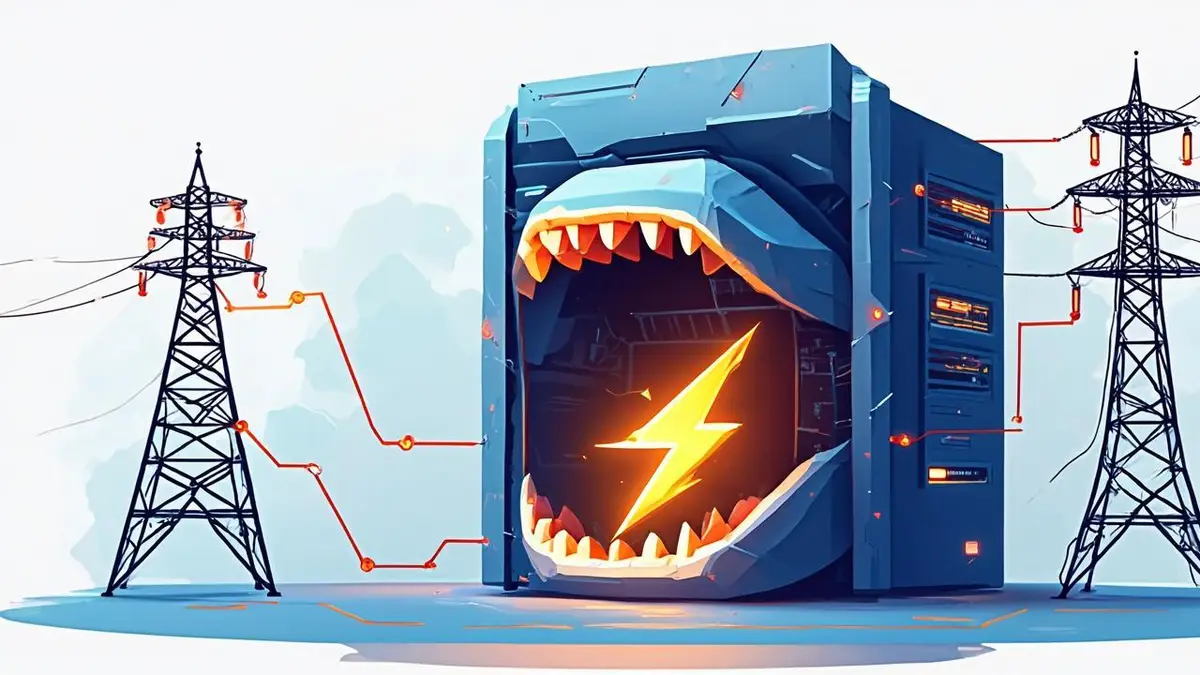
AI data centers are enormously power-hungry. Each new cluster of servers needs not only chips but also electricity, transformers, transmission lines and cooling systems. That demand is arriving faster than grids can expand, and building new generation and transmission takes years. Utilities and governments are therefore borrowing heavily to fund infrastructure that will not produce revenue for a long time. That borrowing competes directly with government bonds for the same pool of long-term savings.
There is a second channel too. Investors who once saw long-dated government debt as the safest asset in the world now worry that AI investment will keep inflation and interest rates structurally higher. If the economy’s productive capacity grows more slowly than the electricity bill for AI, the result is upward pressure on prices and yields. That makes long bonds less attractive, so buyers demand a bigger premium to hold them.
The irony is that even if AI succeeds spectacularly, the fiscal math may not improve. A productivity boom would generate profits and taxable income, but it would also require enormous continued spending on power, land, water and equipment. Some economists argue governments may eventually tax the resulting corporate gains heavily to service the debt taken on during the build-out. In that scenario, the market’s current anxiety is not a bubble bursting but a bill arriving.
For ordinary investors, the practical lesson is that the old assumption — long government bonds are a safe hiding place — deserves re-examination. Portfolios built around that idea have been bruised repeatedly this year. Meanwhile, the companies actually supplying power equipment, grid hardware and cooling technology are attracting capital that used to sit in bonds.
The story is still unfolding, and nobody knows whether AI will deliver the productivity gains its backers promise. But the bond market, which prices the future more directly than almost any other market, appears to have already started voting. The era in which governments could borrow cheaply for decades may be giving way to one in which every additional unit of electricity has a price — and a yield attached.