Kodak's Yellow Becomes a Fashion Label, and the Film Giant Isn't Even Selling Film
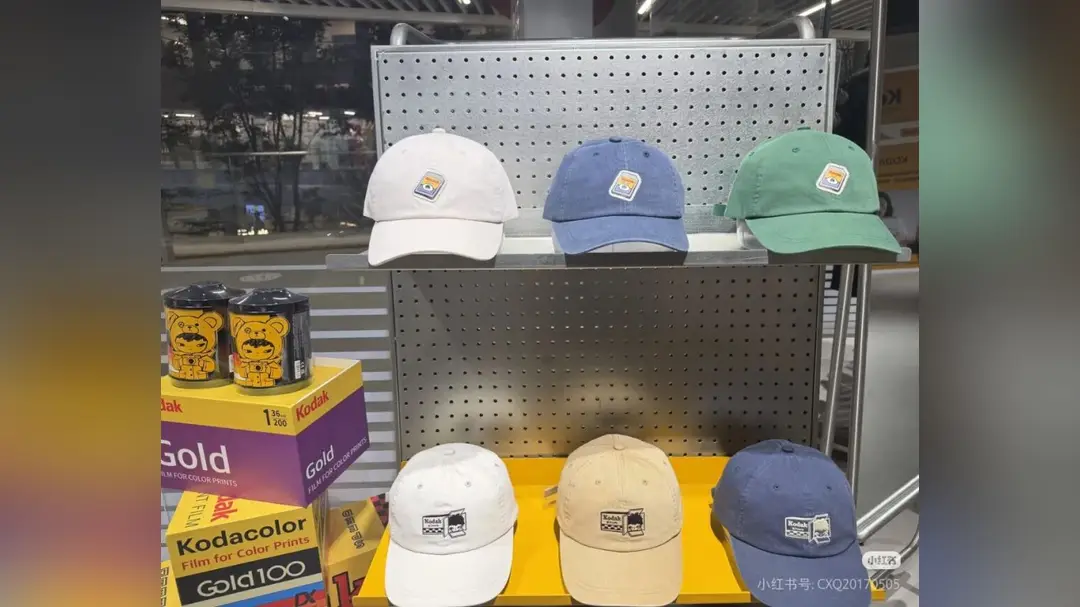
Imagine a clothing store where the entire palette is yellow, red and black, and the only decoration on the sweatshirt is a large letter K. Last autumn, a shop in Seoul’s Seongsu-dong district — a former industrial quarter now packed with concept stores and pop-ups — drew long queues for exactly that. The brand behind it was Kodak, the American company most people associate with film canisters and family photo albums.
The same yellow showed up in Shanghai this May. Inside a retro-cinema-styled city store in Zhangyuan, a restored heritage block in the city center, young visitors held up their phones to photograph a plush figure called Hirono dressed in a yellow one-piece suit. Hirono is a collectible character from the designer toy world, and the collaboration put Kodak’s color next to a figure that already has its own fan base. Two cities, two very different retail formats, one shared visual identity.
That identity is the point. Kodak’s yellow-and-red scheme is one of the most recognized color systems in consumer history, built up over decades when the company’s film boxes sat in drawers and camera bags worldwide. Even as chemical film faded from daily life, the palette kept working — on packaging, on signage, on the edges of photographs people still scan and share.
What is being sold here is not photography. The merchandise is apparel and toys, and the appeal is nostalgic rather than practical. For younger buyers who never loaded a roll of film, the draw is the look: bold, simple, slightly retro, and easy to photograph. For older ones, it is a shortcut back to birthdays, school trips and the envelopes of prints that used to come back from the lab.
This is a familiar playbook for heritage brands with strong visual assets. License the marks to partners who can design and distribute clothing, accessories and collectibles, and let the parent company collect royalties while someone else carries the inventory risk. The brand becomes a mood rather than a product line, and the mood can travel into categories the original business never touched.
The Shanghai example shows why the strategy suits China’s retail scene in particular. Designer toy culture, pop-up shops and photo-friendly interiors are now a standard part of how young urban consumers spend weekends. A recognizable color scheme gives a storefront an instant story, and a collectible gives shoppers something to take home and post about. The line between a brand collaboration and a tourist attraction has largely dissolved.
The risk is that color alone does not build loyalty. A yellow hoodie is easy to copy, and a licensed label can drift into novelty if the products do not hold up. The Seoul queue and the Shanghai photo crowd are encouraging signals, but they measure novelty as much as affection.
Still, the contrast is striking. A company whose name was once synonymous with a physical medium now trades on the look of that medium, in cities where few customers have ever developed a roll. Whether Kodak’s yellow can keep selling clothes and plush toys without the film business behind it is the question the next round of store openings will answer.