Seres Profits Return After Huawei Split, but Sales Fall 41.7%
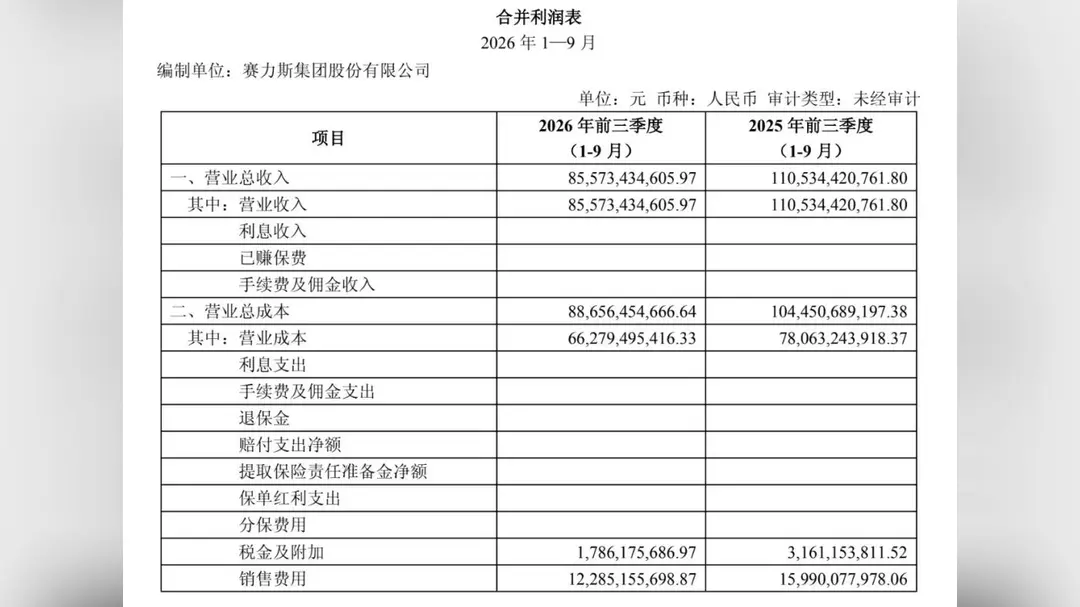
Seres, the Chongqing-based automaker that became famous by building Aito cars with Huawei, has reported its first quarterly results since the two companies reworked their partnership. The picture is unusual: revenue fell sharply while profit returned.\n\nThird-quarter revenue came in at 28.08 billion yuan, down 41.7% from a year earlier, according to the earnings release published on the evening of October 30. Net profit attributable to shareholders reached 1.42 billion yuan. That is a striking turnaround from the second quarter, when the company posted a loss of roughly 2.471 billion yuan.\n\nThe gap between falling revenue and rising profit is the story. Unit sales reportedly dropped by about 40%, which explains the top-line decline. Yet the bottom line improved enough to suggest that what Seres did sell was more profitable, or that one-off gains and cost cuts did much of the work. The report notes that the profit figure looks less impressive once non-recurring items are stripped out, a standard check for investors trying to see the underlying business.\n\nFor global readers, some background helps. Seres was a modest commercial-vehicle maker before it teamed up with Huawei, the telecoms and consumer-electronics giant. Under that arrangement, Huawei supplied smart-driving systems, cockpit software and, crucially, the retail muscle of its flagship stores. The cars carried the Aito name, and buyers often described them as Huawei cars built by someone else.\n\nThat arrangement is now being adjusted. The two sides have been reallocating responsibilities in the Aito venture, and Seres has been working to establish itself as a car company in its own right rather than a manufacturing arm behind a partner’s brand. The third-quarter report is the first real test of what that separation costs.\n\nThe answer, at least for now, is volume. Losing the tightest possible association with Huawei appears to have dented demand, even as the company kept more of each sale. China’s electric and hybrid vehicle market is brutally competitive, with dozens of brands discounting and launching new models almost monthly. In that environment, a 40% sales decline is difficult to reverse quickly.\n\nThe profit number also deserves scrutiny. A swing of nearly four billion yuan between consecutive quarters, in a business where revenue fell, usually involves more than operating leverage. Investors will want to see whether the improvement came from a better product mix, from cost discipline, or from items that will not repeat.\n\nWhat happens next depends on whether Seres can rebuild sales without leaning on its former partner’s showrooms. The company has its own lineup and its own branding ambitions, but Chinese buyers are loyal to recognizable technology names. Whether a standalone Seres can command the same prices is the open question.\n\nFor the wider industry, the report is a useful data point on the value of these technology alliances. Huawei has struck similar deals with several automakers, and each is watching to see how much of the magic belongs to the carmaker and how much to the badge on the screen. Seres has just published one answer, and it is mixed.