China's Lamp Capital Plans a 200-Meter Tower With a Rooftop Ferris Wheel
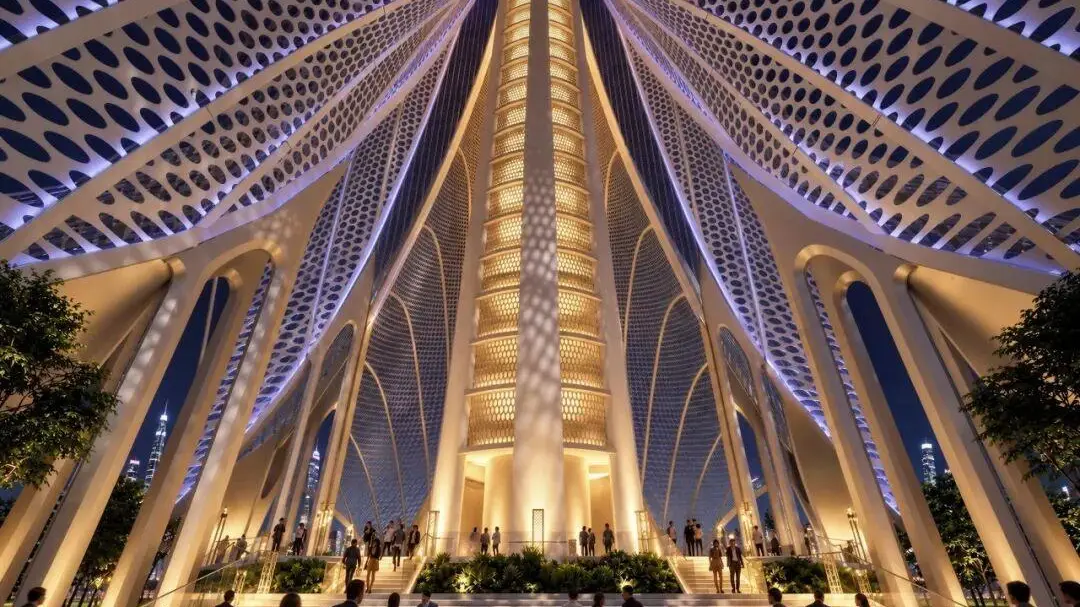
The town of Guzhen, in Zhongshan city in southern China’s Guangdong province, has built its reputation on light. Known as China’s lamp capital, it hosts thousands of lighting manufacturers and traders. Now local planners have released concept images for a project they hope will make the town itself a destination: a tower called the Lamp King, topped with a Ferris wheel.
The project is billed as the largest culture, commerce and tourism development in Guzhen in nearly a decade. It sits on about 100 mu of land south of the Dengdu Ecological Wetland Park, with total investment of 2 billion yuan (roughly $280 million). The centerpiece is a super-high-rise tower of more than 200 meters.
Inside, planners envision a lamp culture museum, a commercial complex, a high-end hotel and an elevated observation deck. The mix is meant to combine industry display, tourism photo spots, shopping and leisure in one complex. Concept renderings show the tower by day from above, the Ferris wheel at its crown, and a surrounding district built for foot traffic.
The ambition is explicit: to help Guzhen move from being known as China’s lamp capital to being known as the world’s lamp capital. For a manufacturing town, that means selling not just products but the story of how they are made, and giving visitors a reason to stay overnight rather than pass through on a sourcing trip.
The project has been on the ground for nearly three months, according to the update accompanying the new renderings. That is an early stage for a development of this size, and the images are concepts rather than finished construction.
Guzhen is not alone in trying to turn an industrial specialty into tourism. Across the Pearl River Delta, towns built on a single trade, from furniture to ceramics to lighting, have looked for ways to add hotels, museums and exhibition space. The logic is that business visitors already come; the question is whether leisure travelers will follow.
A 200-meter tower with a Ferris wheel is a conspicuous bet on that idea. It would give the town a skyline landmark and a symbol of its trade, while the museum and commercial space would give visitors something to do beyond showrooms. Whether it works will depend on execution, transport links and the willingness of tourists to add a lighting town to their itineraries.
For now, the renderings offer a glimpse of how one Chinese manufacturing hub imagines its next chapter: less a factory town, more a place people come to see, shop and stay.