Liangzhu Forum Draws Global Voices to Hangzhou's Ancient Ruins
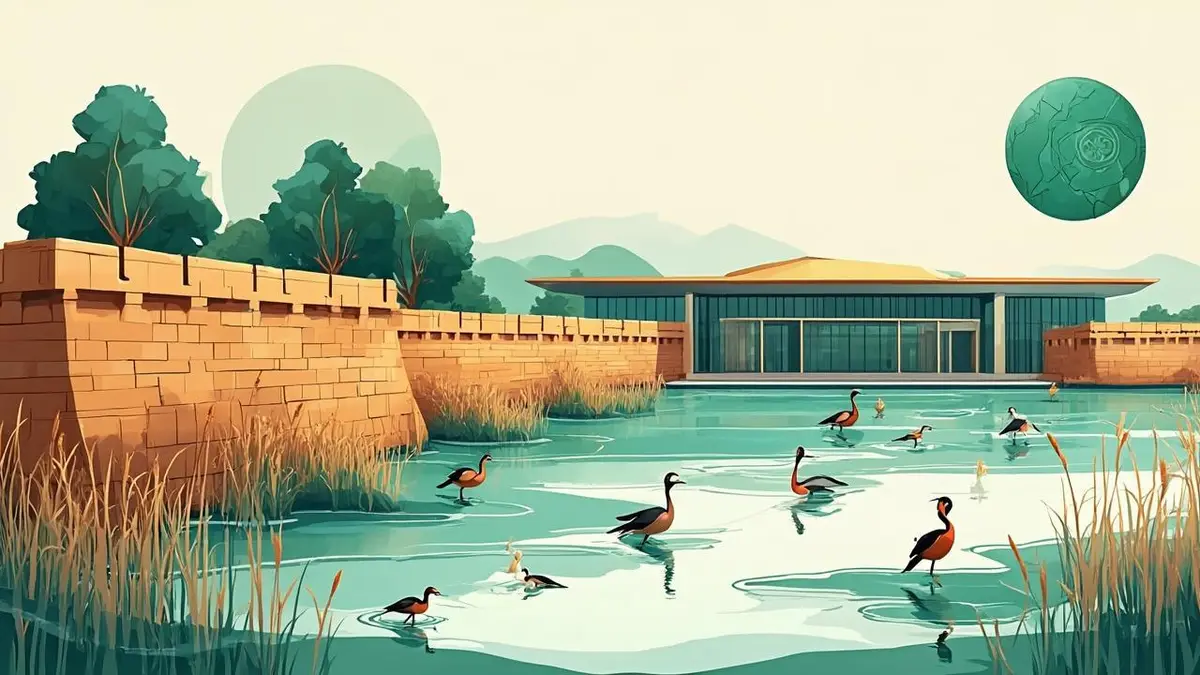
Hangzhou, in eastern China’s Zhejiang province, has once again become a meeting point for people who think about the past. On October 18, the city hosted the fourth edition of the Liangzhu Forum, an annual gathering devoted to cultural exchange between civilizations. The event takes its name from the Liangzhu archaeological site on the city’s outskirts, a Neolithic settlement of walls, waterways and finely worked jade that researchers date to roughly 5,000 years ago.
This year’s theme, loosely framed around how culture can build bridges between civilizations, brought speakers from several countries. James Ratcliffe, legal counsel for a British art loss register, described the forum as a practical chance for people from different traditions to compare notes. Ali Darabi, a deputy minister in Iran’s cultural heritage, tourism and handicrafts ministry, said he had taken part for three years running and that culture and civilization know no borders. Michael Pearson, a former president of the Australian branch of the International Council on Monuments and Sites, said he has long understood that civilizations never exist in isolation and that he hoped to see more dialogue across regions here.
The setting matters as much as the speeches. Liangzhu was inscribed on the UNESCO World Heritage list in 2019, and the surrounding park, with its reconstructed earthen walls, burial mounds and wetland landscape, has become a draw for both scholars and day-trippers. A dedicated museum nearby displays the site’s signature jade cong tubes and bi discs, whose precise carving still puzzles specialists. For visitors, the appeal is partly the sheer age of the place and partly the quiet: reed beds, water birds and low green hills rather than crowds and souvenir stalls.
Hangzhou itself has been building a cultural calendar around the site. The city is already known internationally for West Lake, a UNESCO-listed landscape of causeways and pagodas that has inspired poets for centuries, and for its tea culture, with Longjing green tea grown in the hills to the west. Adding Liangzhu gives the city a second, much older story to tell, and officials have been keen to position the forum as a recurring fixture rather than a one-off conference.
The morning of the opening followed a familiar pattern for such events: delegates arriving early, greetings exchanged outside the hall, and a programme of speeches and panel sessions inside. Much of the discussion centred on the practical side of heritage work — how sites are protected, how museums cooperate across borders, and how cultural tourism can be developed without damaging what draws people in the first place.
For travellers, the forum is a reminder that Zhejiang province rewards time spent beyond the obvious stops. Liangzhu is an easy half-day trip from central Hangzhou, and it pairs well with the tea villages and the city’s canal-side neighbourhoods. The site is at its best in spring and autumn, when the wetlands are green and the light is soft.
The forum is expected to return next year. Whether it grows into a genuinely global fixture or remains a regional talking shop will depend on how many of the ideas aired this week turn into joint exhibitions, research partnerships and exchanges of visiting experts. For now, the message from the podium was simple: ancient places can still start new conversations.