China's National Day Gridlock: Three Hours and Still in Wenzhou
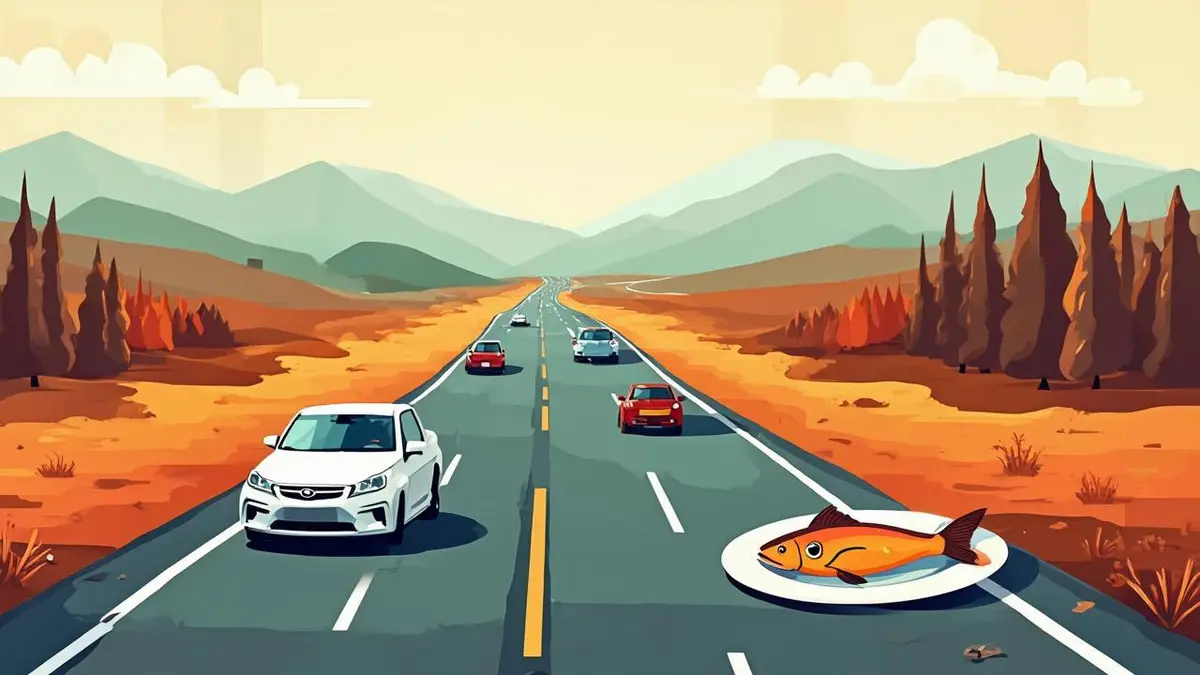
China’s National Day holiday, which began on October 1, is the country’s biggest annual travel window. This year, the opening act was familiar: gridlock. In Wenzhou, a coastal city in Zhejiang province, drivers who left early on September 30 found themselves stuck anyway, and social media filled with complaints that a three-hour drive had not even cleared the city limits.
One traveler who set off at 9:30 a.m. said an hour and a half later the car was still inside Wenzhou. Another, driving home to Cangnan from Hangzhou, covered 220 kilometers in three and a half hours and was told by navigation that four and a half more hours remained. Some people rose at 3 a.m. to beat the rush, only to join it. The scenes, shared on Douyin and Xiaohongshu, are a reminder that in China holiday traffic is less a journey than a collective endurance test.
Yet the same holiday also exposed a quieter kind of congestion: a fight over reputation. In Hangzhou, a city of about 12 million people and one of China’s wealthiest, a single dish has become an unlikely lightning rod. West Lake vinegar fish, a steamed grass carp finished with black vinegar and sugar, is the city’s signature plate. This summer, after the peak season, social platforms filled again with complaints from visitors who paid nearly 200 yuan for a few bites and left disappointed.
Locals pushed back, arguing that the worst reviews come from tourist-trap restaurants that no resident would recommend. The dispute has revived a label that stings in a city proud of its food culture: the idea that Hangzhou is a culinary desert. The irony is sharp. Hangzhou’s economy has grown to roughly 2.3 trillion yuan in GDP, placing it among China’s top ten cities, with per-capita disposable income above 80,000 yuan and nearly 300 domestically listed companies. By the numbers, it is a magnet for talent and money. By the fish, it is a punchline.
Both stories point to the same underlying shift. China’s holiday travel is no longer just about getting somewhere. It is about what happens when hundreds of millions of people move at once, and how those experiences are broadcast, rated and argued over in real time. A traffic jam becomes a national conversation; a plate of fish becomes a test of civic pride.
For global readers, the context matters. National Day, marking the founding of the People’s Republic on October 1, 1949, triggers a week-long break. It is the busiest travel period of the year, surpassing even the Spring Festival for road trips, as families combine sightseeing with visits home. Highways waive tolls, which encourages even more driving, and popular routes can slow to a crawl.
Cities have learned to compete for these crowds. Scenic spots roll out autumn-themed events, hoping to capture short-distance travelers who want an easy escape. But the flip side is scrutiny. When a destination’s signature dish disappoints, the internet remembers. Hangzhou’s defenders say the answer is not to abandon the fish but to steer visitors toward the kitchens that still cook it well.
Whether the holiday ends with smoother roads or a better plate of fish, the pattern is clear: in China, travel is a shared public experience, and its successes and failures are debated as fiercely as any headline. For a city or a highway, reputation is now part of the itinerary.