Wei Brand's New Blue Mountain Goes Boxy, and Tank Should Worry
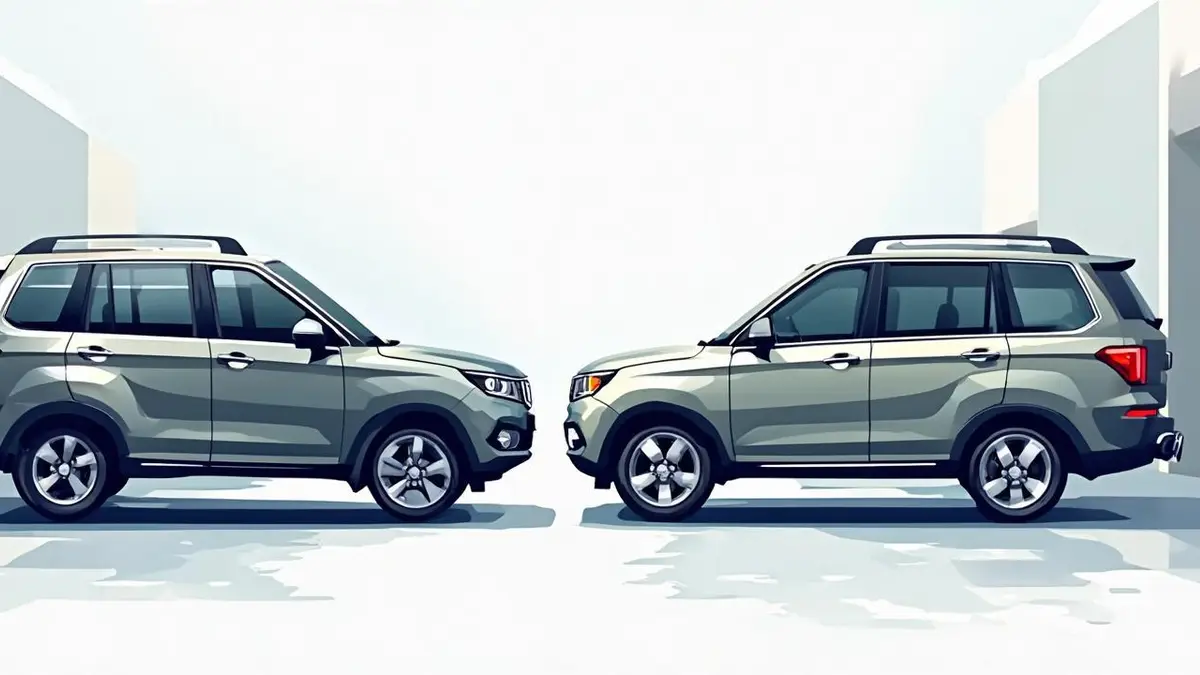
On November 9, Great Wall Motor’s premium Wei brand opened pre-sales for the second-generation Blue Mountain, starting at 289,800 yuan (roughly $40,000). The price is unremarkable for a large Chinese family SUV. The shape is not.
The first Blue Mountain was a smooth, rounded six-seat SUV: 5,156 mm long, with a 3,050 mm wheelbase, aimed squarely at city families who wanted space and a quiet cabin. The new one is a box. It has a side-hinged tailgate, a spare wheel mounted on the outside of the rear door, a vertical-slat chrome grille and a pair of round headlights. It is 2,050 mm wide and 1,960 mm tall — wider and taller than before, and much more upright.
That silhouette is not accidental. It is the look that Great Wall’s Tank brand built its reputation on: rugged, retro-flavoured off-roaders that sell on presence rather than lap times. Chinese buyers have rewarded that formula, and the styling has become a recognisable shorthand for a certain kind of weekend-adventure aspiration, even for people who never leave the asphalt.
So the interesting question is internal. Wei was set up as Great Wall’s upscale, technology-forward marque, positioned above the mass-market Haval line. Tank sits alongside it as the lifestyle and off-road badge. By dressing the Blue Mountain like a Tank, Wei is reaching into a sibling’s wardrobe — and potentially into a sibling’s customers.
There are commercial reasons to try. China’s large-SUV segment is crowded and increasingly price-driven, and a distinctive silhouette is one of the few levers left that does not immediately erode margin. A boxy profile also photographs well on social media, where Chinese car launches now live or die in the first 48 hours. The risk is brand confusion: if Wei and Tank sell visually similar vehicles at overlapping prices, buyers may simply pick whichever dealer is closer.
The move also says something about how quickly Chinese car design fashions turn. The rounded, aerodynamic crossover was the default for years, as brands chased efficiency and a vaguely European look. The square, upright box has returned as a statement of capability, helped by the global success of similarly shaped off-roaders. Wei is betting that the second look now sells better than the first.
What the pre-sale does not yet settle is whether the mechanical package matches the costume. The announcement focused on dimensions and styling, and pre-sales figures will be the first real test of whether buyers wanted the Blue Mountain to change character or just to look as though it had. Deliveries and dealer orders over the coming weeks will show whether Wei has found new customers — or borrowed them.