China's Nio Completes 3,605km Silk Road Battery-Swap Route to Kazakhstan Border
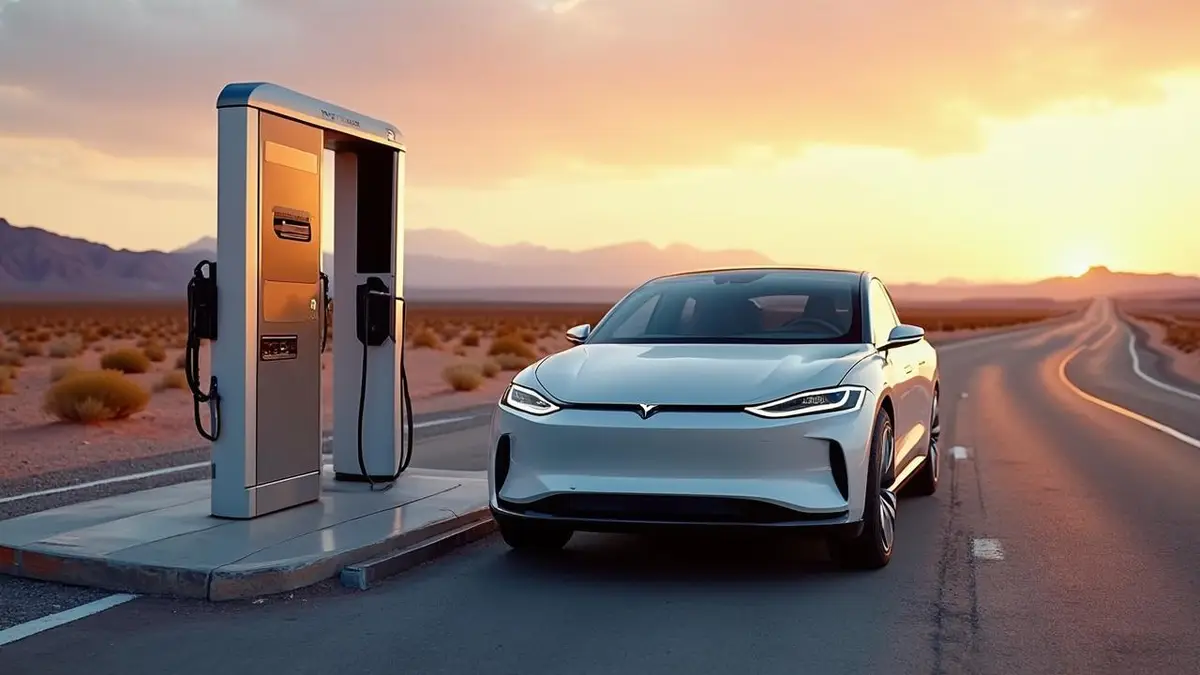
Chinese electric-vehicle maker Nio has finished building a battery-swap corridor that stretches 3,605 kilometres from China’s eastern heartland to its far western border with Kazakhstan. The company announced that its westernmost station opened on September 25 at a hotel in Khorgos, a trade town on the border and the western terminus of the Lianhuo Expressway. With that station live, the so-called Silk Road battery-swap route is fully connected, linking 33 swap stations along the way.
Battery swapping is Nio’s signature answer to one of the biggest anxieties around electric cars: how long it takes to recharge. Instead of plugging in and waiting, a driver pulls into a station where automated equipment removes the depleted pack and bolts in a fully charged one. The whole exchange typically takes a few minutes, roughly the time of a conventional fuel stop. Nio says the network now means a driver can start from any of its stations in China and reach every provincial-level region in the country using swaps alone.
The scale of the build-out is significant. Nio said it has now built more than 9,400 swap stations nationwide, a figure that includes both highway corridors and dense urban coverage. The Silk Road route was designed with long-distance travel in mind, threading through the sparsely populated northwest where charging infrastructure has historically been thin. For drivers crossing deserts and high plateaus, a guaranteed swap every hundred kilometres or so changes the calculus of whether an electric car can handle the trip.
Khorgos itself is an evocative endpoint. The town sits at a busy land port through which goods move between China and Central Asia, and the Lianhuo Expressway that ends there runs from the eastern port city of Lianyungang. Nio has framed the completed corridor as part of a broader push to make electric road trips practical across the country’s vast distances, a pitch aimed at buyers who might otherwise dismiss EVs as city-only machines.
Nio is not alone in betting on swapping. Several Chinese automakers and battery giants have invested in the technology, and regulators have signalled support for standardising it so that packs from different brands can be exchanged at shared stations. Standardisation remains a work in progress, and analysts note that building and operating swap stations is capital-intensive. Still, for Nio the network doubles as a marketing tool and a loyalty hook, since owners gain access to a service rivals cannot easily match.
The timing lands during a fiercely competitive stretch for China’s EV market. Automakers are rolling out new models at a rapid clip, and price pressure has squeezed margins across the industry. Against that backdrop, infrastructure has become a differentiator. Nio’s pitch is that range anxiety fades when a fresh battery is always a short drive away, whether you are commuting in Shanghai or crossing the steppe toward Central Asia.
For travellers, the completed route opens up an unusual kind of road trip. A driver could, in theory, cross from China’s eastern coast to its western frontier with no more than a series of brief battery exchanges, pausing in cities and desert towns along the way. Whether the corridor becomes a well-worn tourist artery or mainly a symbol of infrastructure ambition, it marks one of the more ambitious attempts yet to make long-distance electric driving feel ordinary.