Toddlers Outwalk Adults: 18,000 Steps a Day, Study Finds
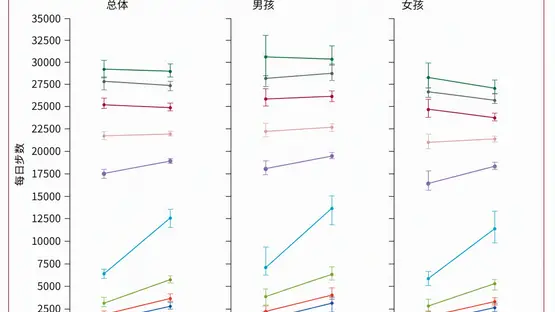
Parents who spend half a day chasing a three-year-old may feel they have done their exercise for the week. A new international study suggests the toddler is the one getting the real workout. Researchers found that children aged three and four take a median of 18,542 steps a day — roughly double the 10,000-step target many adults struggle to reach.
The research, led by a team at the University of Seville in Spain, pooled data from 44 countries and 3,570 children in that age group. It was published on September 30, 2026. Rather than relying only on parents’ memories or phone pedometers, the study drew on accelerometer-based measurements that record actual movement, giving a more reliable picture of how much small children really move.
The headline number hides big differences. Children in rural areas walked more than those in cities, and children in low-income countries outwalked peers in richer ones. Boys generally logged more steps than girls. Researchers suggest the reasons are practical: children in rural settings often walk to school, to shops or around fields, while urban families rely more on cars, buses and strollers.
For parents, the finding is a reminder that young children are natural movers. The toddler who begs to be carried after two steps may spend the rest of the day climbing sofas, running down corridors and circling playgrounds. Much of that activity is invisible to adults because it comes in short bursts rather than a single long walk.
The study also adds to a growing body of work on early childhood physical activity. Public health guidelines usually focus on older children and adults, with less clear advice for the under-fives. Data from a wide range of countries helps researchers understand what normal movement looks like at this age — and how much of it may be lost as children grow older and spend more time sitting in classrooms and in front of screens.
There are caveats. Step counts are only one measure of activity and do not capture climbing, jumping or rough-and-tumble play. The study describes patterns rather than proving causes, and the countries involved vary widely in climate, culture and daily routine. Still, the scale — 3,570 children across 44 countries — makes it one of the broader snapshots of toddler movement to date.
For families, the takeaway is less about hitting a number than about making walking normal. A short walk to nursery, a trip to the park or errands on foot all add up, especially if they replace short car journeys. And for anyone who feels outdone by a preschooler, the science offers some comfort: the child has a head start, a lighter frame and far more energy for running in circles.