The Mouse That Sheds Its Own Skin to Escape a Predator
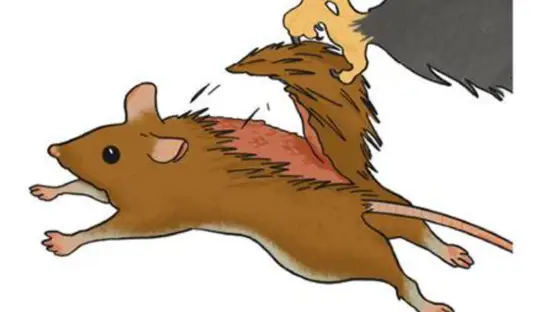
Nature has a long and gruesome catalogue of escape tricks. Lizards drop their tails, sea cucumbers eject sticky threads from their rear ends, and some insects shed entire limbs. The logic is brutal but effective: sacrifice a body part, keep the body. Until now, mammals were thought to be largely above this kind of gamble, too warm-blooded and too dependent on a continuous hide to survive being flayed. A small rodent has now broken that rule.
Researchers in China have documented a mouse species that, when seized by a predator or a scientist’s hand, rapidly sloughs off a patch of its own skin and bolts. The behaviour, described in a recent study, is a form of self-amputation known as autotomy, and it appears to be the first clear case of the strategy in a mammal. The animal does not chew itself free or wriggle until the attacker lets go. It simply lets go of the skin.
The mechanics are startling. The skin tears away along a natural plane, leaving the mouse with a raw, exposed wound rather than a clean cut. That is the trade-off. A lizard’s lost tail can regrow; mammalian skin must heal the hard way, by scarring. Yet the escape clearly pays off often enough for evolution to have kept it. For a small animal caught in the jaws of something larger, a few centimetres of skin is a cheap price for another day of life.
The finding fits into a broader picture of how animals survive being eaten. Autotomy has evolved independently across the tree of life, from spiders to salamanders, because it works: predators are momentarily confused or left holding a wriggling decoy. What makes the rodent case notable is that mammals were assumed to be excluded. Their skin is stitched to muscle and fascia in a way that seemed to rule out quick release. This mouse suggests the assumption was too tidy.
There are practical implications too. Understanding how the skin detaches so cleanly could inform wound-healing research, and the animal’s ability to survive a large open wound may hold lessons for tissue repair. The mouse also complicates the advice that wildlife handlers should simply grab small mammals firmly. Some of them, it turns out, will hand you a piece of themselves and walk away.
For anyone who has watched a lizard leave its tail twitching on a path, the mouse offers a reminder that nature’s escape artists are more resourceful than we assume. The trick is not new. It is just new to mammals, and it rewrites a small corner of the survival manual. Sometimes the best way out of a tight spot is to leave a little of yourself behind — and run.