China's Newest Carrier Drone Lifts Off From a Helicopter Deck
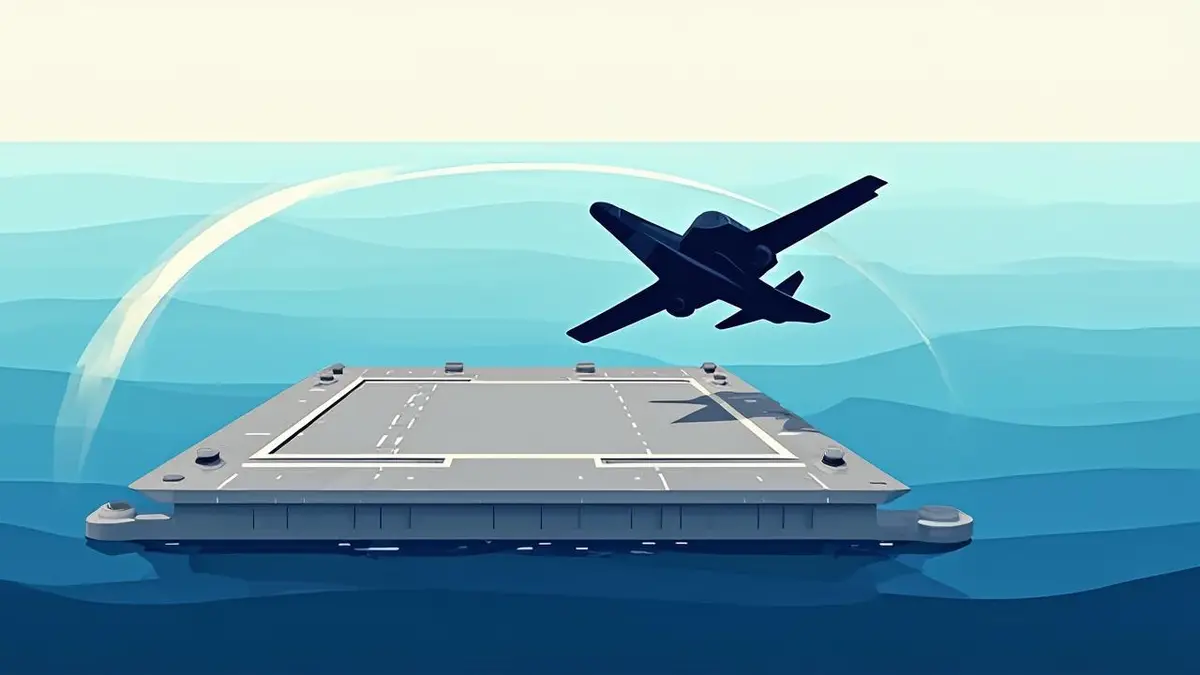
China’s navy has flown a stealth attack drone from the deck of its newest amphibious assault ship, a first for a class of vessel better known for launching helicopters and landing craft. During sea trials in late October, the Sichuan, the first of the Type 076 class, hosted take-offs and landings by the Gongji-21, a fixed-wing, radar-evading drone designed both to find targets and strike them.
The announcement, which surfaced on Chinese social platforms over the weekend, framed the milestone as a step in the country’s amphibious warship programme. It also marks the first time a fixed-wing stealth drone has operated from a large Chinese naval platform, a capability that until now belonged mainly to full-size aircraft carriers with catapults.
The Sichuan is a hybrid design. It is classed as an amphibious assault ship, meaning it carries troops, vehicles and landing craft for operations launched from the sea toward shore. But it also has a flat flight deck and an electromagnetic catapult, the same kind of launch system used on China’s newest carriers to throw heavy aircraft into the air without a ski jump.
That combination is unusual. Most amphibious assault ships rely on helicopters or short take-off, vertical landing jets. Adding a catapult lets the ship launch larger, heavier fixed-wing aircraft, including drones that can stay aloft for long stretches and carry weapons or sensors.
The Gongji-21 is described as a stealthy, multi-role drone: it can loiter, observe and, when needed, strike. Flying such aircraft from a ship at sea is harder than from land. Decks pitch and roll, salt spray and wind complicate every approach, and recovery — catching the drone back on deck — is the trickiest part. The reported success suggests the ship and aircraft have been tuned to work together.
Chinese commentators have been quick to speculate about what comes next. A drone that can launch from an amphibious ship extends the reach of a vessel that might otherwise be limited to helicopters. It could scout ahead of a landing force, watch over a wide area of ocean, or act as a relay for other units. Enthusiasts have also asked whether more drone types will follow, and whether the Type 076’s catapult will eventually handle crewed aircraft too.
For global readers, the detail worth noting is not a single flight but the direction of travel. China is pairing drones with large surface ships, and it is doing so on a hull class that many navies use for troop transport rather than air power. That suggests the line between an amphibious ship and a small carrier is blurring.
The Sichuan’s trials are still in progress, and the drone work appears to be part of a broader test programme rather than an operational deployment. The next things to watch are whether the Gongji-21 becomes a regular part of the ship’s air group, how many of the drones a single hull can carry, and whether the same aircraft shows up on other ships in the class. Each of those would turn a one-off demonstration into a standing capability.