Huawei's Mate 90 Launches With 5,999 Yuan Price Tag and First Optical Kunlun Glass
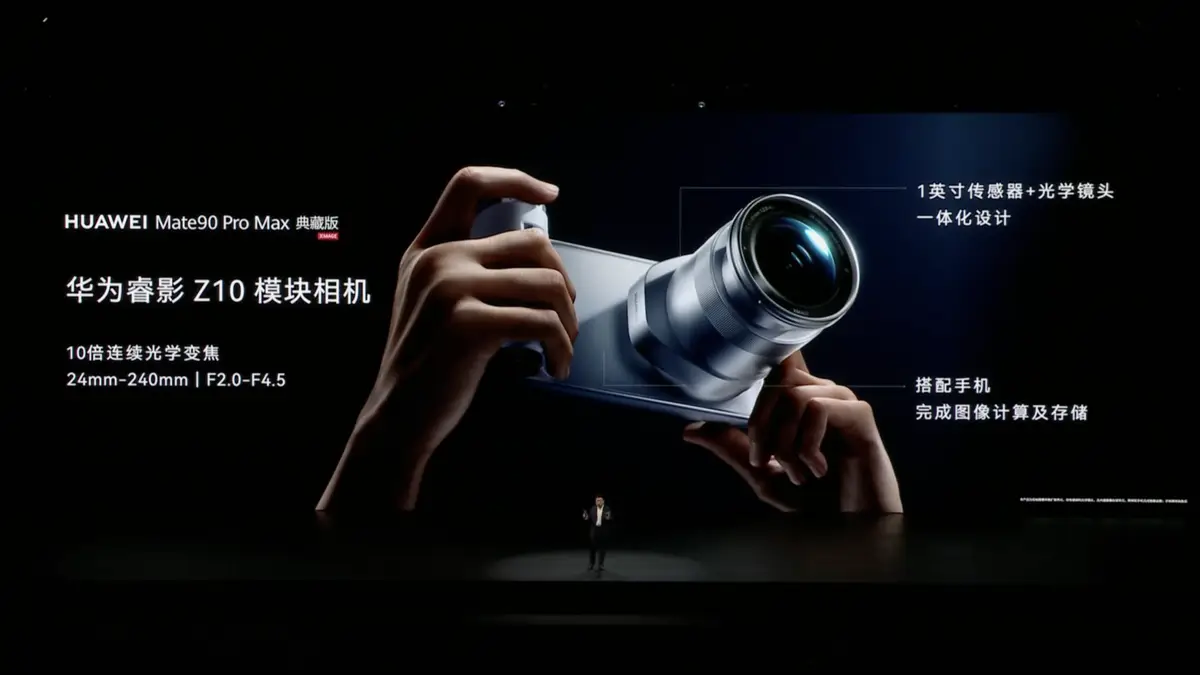
Huawei introduced its Mate 90 series on October 1, marking the first time the company has launched and put a flagship phone on sale on the same day. The lineup includes the Mate 90, Mate 90 Pro, Mate 90 Pro Max, a Pro Max Collector’s Edition and the top-tier Extraordinary Master model, with prices starting at 5,999 yuan.
The launch date was symbolic. Three years ago, the return of the Mate 60 series was described by fans as the first light in the darkness for Huawei’s phone business. This year, executive director and terminal business chairman Richard Yu framed the Mate 90 event as a moment of full brightness, presenting the lineup as the closing chapter of 2026’s new-phone season.
The headline hardware feature is what Huawei calls the industry’s first optical Kunlun glass, used on the camera cover of the Mate 90 Pro and above. Huawei says the material makes the cover 20 times more drop-resistant than the previous generation. The phones also use an integrated basalt-style body structure that the company says improves rigidity.
Pricing drew as much attention as the hardware. Yu said the 5,999 yuan starting price represents a sincere offer at a time when memory chip prices are rising sharply across the industry. Component costs, particularly for memory, have climbed through the year, and Huawei’s decision to hold the entry price near last year’s level was widely read as an attempt to defend its premium position in a crowded market.
The Mate 90 series arrives into an unusually busy autumn. Domestic rivals have released a wave of flagship phones over the past two months, and Huawei’s launch effectively closes the season. The company has leaned on its in-house chip and software ecosystem as a differentiator, and the Mate line remains its most important showcase for that strategy.
For global readers, the Mate 90 matters beyond China. Huawei’s flagship launches set the tempo for the country’s premium Android market, and features introduced here — from display glass to camera coatings — often appear in rival devices within a year. The optical Kunlun glass branding also signals Huawei’s continued push to own key component technologies rather than rely on outside suppliers.
Huawei has not announced international availability details for the Mate 90 series, and past Mate launches have reached overseas markets selectively. Still, the pricing and materials story will be watched closely by suppliers, analysts and competitors as a measure of how much room Huawei believes it has to charge a premium while component costs climb.
The launch also underscores how China’s biggest phone maker now treats its own events as cultural moments, timed to a national holiday and paired with a broad set of companion devices. Whether the Mate 90 can repeat the Mate 60’s commercial impact will depend on how buyers respond to a phone whose most-touted feature is not a new camera sensor or chip, but a piece of glass.