China's Die-Casting Suppliers Win Toyota Orders but Watch Profits Slide
Guangdong Hongtu, a Chinese die-casting company, disclosed a new order on November 5: it has entered Toyota’s supply chain for integrated die-casting, the process often called gigacasting in which very large single pieces of aluminum replace dozens of welded parts. Its main related customer until now was Xpeng, the Guangzhou-based electric-car maker.
The order is a vote of confidence in Chinese die-casting capability. Hongtu expects revenue from integrated die-casting products to approach 700 million yuan in 2026, growth of more than 20 percent year on year. That would make the segment a meaningful slice of a business that still earns most of its money from conventional castings and other auto parts.
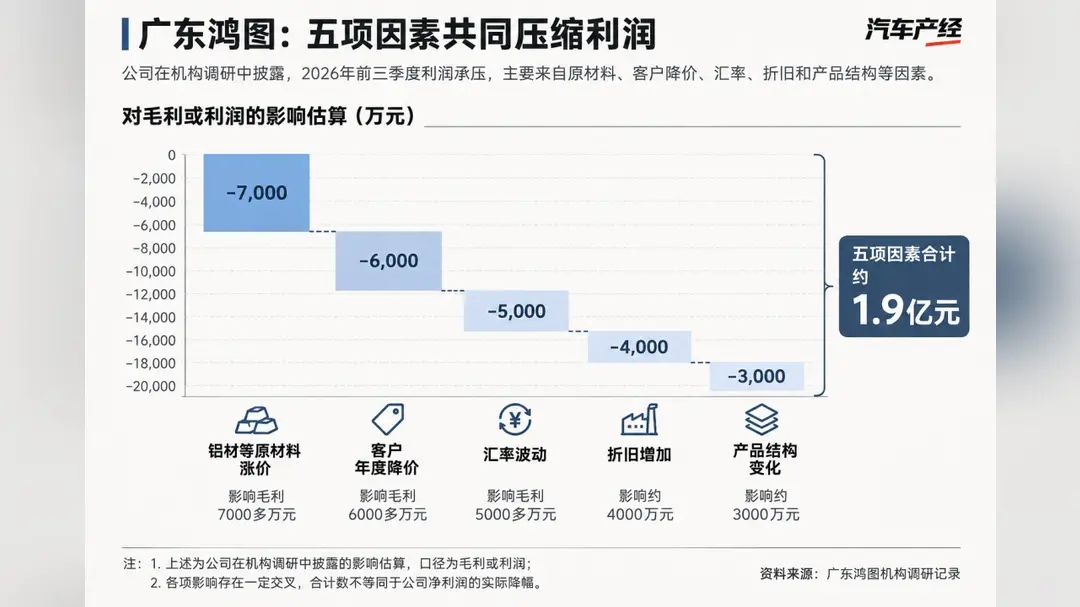
The profit picture is less encouraging. In the first three quarters of the year, Hongtu reported revenue of 6.502 billion yuan, down 2.26 percent from a year earlier, and net profit attributable to shareholders of 60.68 million yuan, down 71.10 percent. The gap between a growing new product line and a shrinking bottom line is the central puzzle of the company’s year.
The explanation lies in how China’s car market now works. Automakers, both Chinese and foreign, have spent two years cutting prices to defend market share. Those cuts are passed down the chain, and parts suppliers are asked to absorb them. A supplier that wins a prestigious contract can still find the margin thin, because the contract price is set by a customer that is itself under pressure.
Hongtu is not alone. The same week brought reports that multinational carmakers now see China as a profit trough rather than a profit cow, with some writing down the value of Chinese assets and turning idle plants into export bases. When the customer’s China business stops earning, the supplier’s China business feels it first.
There is a strategic logic to the Toyota win. Global automakers are still cautious about gigacasting, which demands huge presses and carries repair-cost risks when a large casting is damaged. A Toyota order signals that the technology is moving from a Chinese EV experiment toward mainstream acceptance, and it gives Hongtu a reference customer outside the domestic price war.
Whether that translates into earnings depends on volume and on how much of the cost saving Hongtu is allowed to keep. The company’s own forecast of more than 20 percent growth in gigacasting revenue suggests it expects the order book to fill. The profit line will show whether scale is enough to offset the pricing pressure that has already erased most of this year’s net income.
For global readers, the story is a reminder that China’s auto supply chain is not simply a machine for cheap cars. It is a tier of specialized manufacturers that increasingly set global standards for processes like integrated die-casting, even as they struggle to make those processes pay at home. The next set of quarterly results, and any further Toyota or global contracts, will show whether the strategy is working.