Huawei Teases a Foldable PC Small Enough for an Envelope
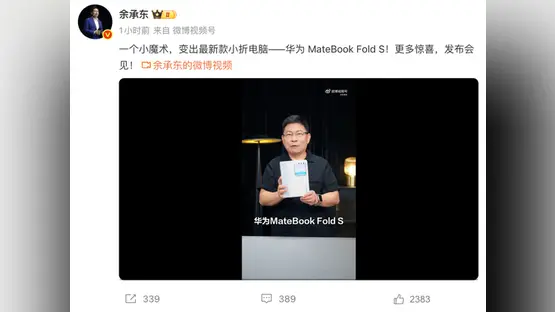
Huawei executive Richard Yu, who leads the company’s consumer device business, posted a short video on his personal social account on November 10 that has since been widely shared in Chinese tech circles. In it, he holds an unfolded Huawei MateBook Fold Ultimate Design, the company’s existing large-screen foldable computer, closes it, and slides it into an ordinary brown paper envelope. He then folds the envelope in half and pulls out a much smaller foldable computer. That device, the video suggests, is the Huawei MateBook Fold S.
The visual trick — a computer emerging from a folded envelope — did the job of any good teaser: it made the size of the new machine instantly legible without a single specification. Chinese discussion forums quickly filled with questions, the most persistent being what the small screen on the back of the device is actually for.
Huawei has not published a launch date, a price or a full spec sheet for the MateBook Fold S. What the teaser establishes is the direction: the company is pushing foldable screens from phones into personal computers, and it is now shrinking the computer rather than only enlarging the phone. The existing MateBook Fold Ultimate Design is a premium, large-format machine; the S suffix implies a more compact take on the same idea.
The rear display is the detail drawing the most speculation. On a foldable laptop, a small outer screen can show notifications, a clock, media controls or a quick preview without the user opening the main panel. It can also serve as a viewfinder for the built-in camera or as a second surface for simple widgets. None of that has been confirmed, and Huawei has said nothing publicly about how the screen will work.
A foldable PC raises practical questions that a foldable phone does not. Keyboards, hinges and cooling all become harder in a smaller chassis, and the price of the large MateBook Fold Ultimate Design already places it well outside mainstream budgets. A smaller model could lower the entry point, but it could also force compromises on battery life and ports.
Huawei’s ability to design its own chips and its HarmonyOS software gives it unusual control over how a device like this is built and sold. That vertical stack is a large part of why the company keeps experimenting with form factors that rivals have been slower to commercialize. Whether buyers follow is a separate question.
The teaser video has done its work: the MateBook Fold S is now one of the most discussed unreleased computers in China. The next step is a launch event, where the rear screen, the hinge and the price will have to answer the questions the envelope deliberately left open.