Inner Mongolia's 2,400-Kilometre Span Makes It China's Longest Province
On a map of China, Inner Mongolia looks like a long ribbon draped across the country’s northern back, curving from the forests of the northeast toward the deserts of the northwest. The comparison often used in Chinese travel writing is that the region is long enough to contain roughly twelve South Koreas or three Japans laid end to end.
The numbers behind that image come from the regional government’s own published data. Inner Mongolia runs from about 126 degrees 04 minutes east longitude to 97 degrees 12 minutes east, a maximum east-west span of roughly 2,400 kilometres. North to south it stretches about 1,700 kilometres at its widest. The total area is 1.183 million square kilometres, third in China after Xinjiang and Tibet — but in sheer length, no other province comes close.
For travellers, that geography is the whole point. A single trip can move from the birch and pine forests of the Greater Khingan range in the northeast, through the rolling grasslands around Hulunbuir that draw photographers each summer, across the Kubuqi and Badain Jaran deserts in the west, and on to the poplar forests of Ejina, which turn gold for a few weeks each October.
The distances are also the challenge. Driving from the eastern tip to the western end is a multi-day undertaking on roads that can be empty for long stretches. Fuel stops, weather and the sheer scale of the land require planning. Chinese travel forums regularly trade itineraries that split the region into eastern, central and western loops rather than attempting one continuous drive.
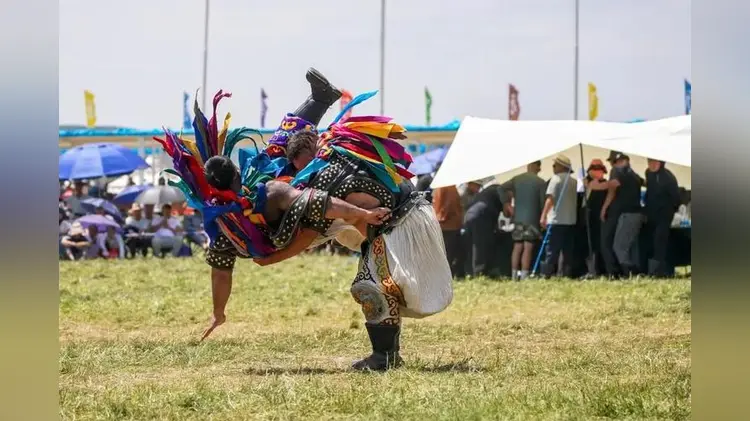
Seasonality shapes the calendar. Summer brings grassland festivals, horse riding and cool nights in the north. Autumn is the season for Ejina’s golden poplars and the Alxa desert, while winter turns parts of the region into a snow and ice destination. Spring is windier and dustier in the west, which is why many visitors avoid it.
Inner Mongolia is also where China’s northern grasslands meet its modern energy economy. The region is a major base for wind and solar power, and the open steppe that tourists photograph is the same land that hosts wind farms and solar arrays. That mix of tradition and infrastructure is part of what makes a road trip here feel different from a standard scenic tour.
For global visitors, the region is reachable by high-speed rail from Beijing to Hohhot, the regional capital, in a few hours, with onward flights to smaller cities such as Hailar and Ordos. Renting a car with a driver remains the most practical way to cover the long empty stretches, and local guides are often the difference between a rushed loop and a memorable one.
The appeal is simple: a region so long that its weather, landscape and culture change several times over before you reach the other end. Few places in China offer that sense of scale on a single journey.