Claude Duet and the Agent Race: Cloud Data Centers Cash In First
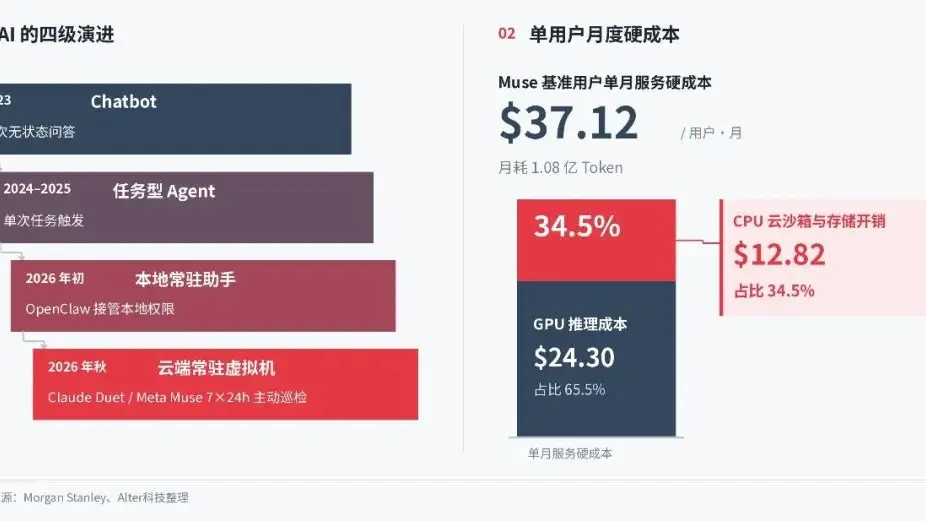
Anthropic, the AI company in the middle of a hotly anticipated IPO, released a new personal and work assistant called Claude Duet in the early hours of October 22. The product belongs to a fast-growing category: the resident agent, a piece of software that stays on in the background, takes on multi-step tasks and works through them on its own rather than waiting for a prompt.
In the weeks before Duet, similar pushes came from Meta’s Muse and from OpenAI. The competition has moved from the model itself to the layer above it, where agents are judged by how much real work they can finish. That shift is now being felt far from the software world, in the server rooms that host the models.
A resident agent changes what a data center needs. Because the agent is always on, the machine is always busy, and the load profile looks less like a short burst of queries and more like a permanent tenant. That rewrites the ratio of CPUs, storage and networking inside the facility. More memory and faster links between machines matter as much as raw accelerator power, and operators have to plan for steady demand rather than peaks.
Chinese technology vendors that sell the picks and shovels of this buildout — servers, switches, storage arrays, cooling and cabling — are among the first to see money arrive. Orders for infrastructure can be booked long before anyone knows whether the agent products themselves will find paying users. Industry analysts describe this as the shovel-seller advantage: when many companies race to build the same kind of application, the suppliers of the underlying equipment get paid regardless of who wins.
The application layer in China is trickier. Cross-platform agents, which would move between different apps and services on a user’s behalf, face practical obstacles: walled gardens between platforms, uneven access to third-party services and uncertainty over how such agents can operate commercially. As a result, the domestic agent market has been slower to produce a breakout consumer product than the infrastructure market has been to produce orders.
That gap is the central question for investors. Infrastructure revenue is real, but it is also a bet on the application layer eventually delivering. If the agents do not find users, the equipment ordered today becomes excess capacity tomorrow. The health of the whole chain therefore depends on whether the software above it can prove it saves people time and money.
For global readers, the pattern is familiar from earlier technology cycles. Cloud computing, mobile internet and the smartphone boom all followed the same sequence: hardware and data center spending first, killer apps later, and a period in between when it was hard to tell whether the spending was prescient or premature. Resident agents are now in that in-between period.
The next few months will show whether Claude Duet and its rivals convert always-on assistance into habitual use. If they do, the data center buildout will look like the early innings of something large. If they do not, the infrastructure vendors will still have banked their orders, while the companies that bought the equipment wait for the applications to catch up.