Pain and Pride: China's Billie Jean King Cup Dream Ends in Shenzhen
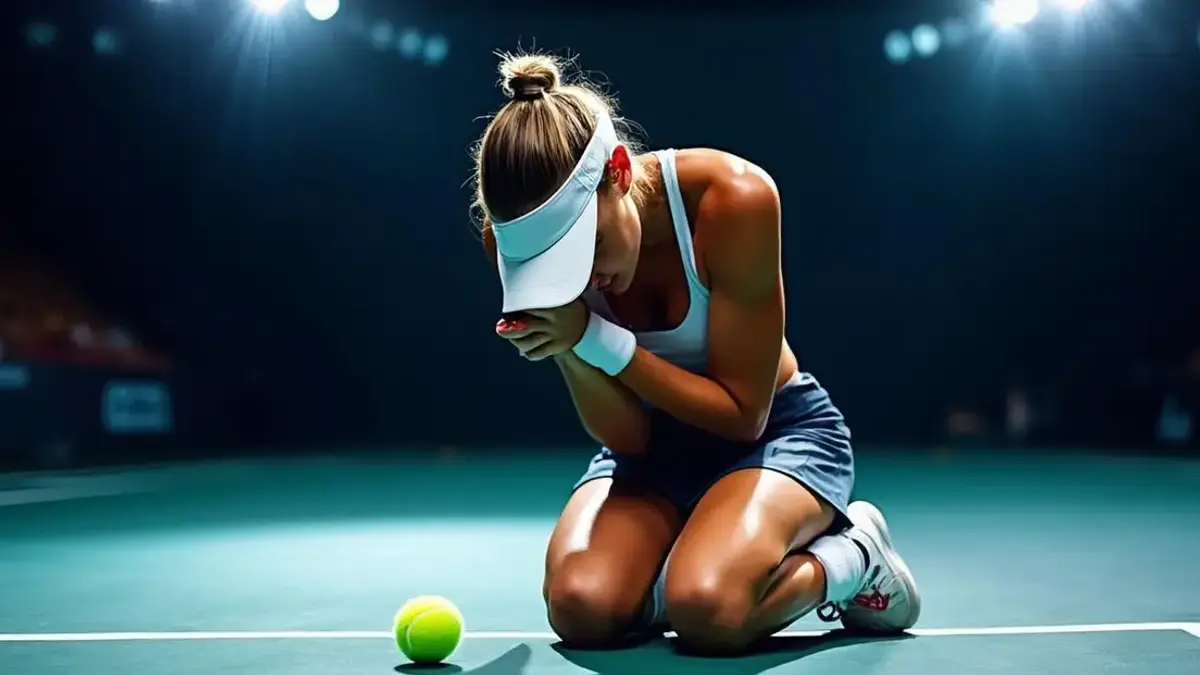
The scoreboard at Shenzhen Bay Sports Center told one story on September 24: China 1, Italy 2. But the quarterfinal of the Billie Jean King Cup — the premier international team event in women’s tennis, often described as the women’s equivalent of the Davis Cup — delivered far more than a scoreline, blending grit, sacrifice and a measure of how far Chinese tennis has traveled.
The night began perfectly for the home side. Zhang Shuai, the veteran of the Chinese squad and a longtime champion in doubles on the international tour, produced a stunning opening against Italy’s Elisabetta Cocciaretto, winning 6-0, 6-2. According to match statistics, she broke her opponent’s serve in every return game of the first set — a ruthless statement that put China ahead in the tie.
That set the stage for the match the crowd had come to see. Zheng Qinwen, who won Olympic singles gold at the Paris 2024 Games and has become the most recognizable face of tennis in China, faced Jasmine Paolini, Italy’s seasoned big-match performer and a proven Grand Slam contender. What spectators did not know was how much discomfort the Chinese star was carrying onto the court.
After the match, Zheng revealed that she had first felt unwell during training two days earlier and wrestled with the decision to play right up until the previous evening. In the end, the fans settled it. “So many supporters came to watch me, and they traveled such a long way to be here,” she said. “I didn’t want to let them down, so today I took painkillers and stepped onto the court.” She dropped the opening set to Paolini 3-6, then forced a second-set tiebreak before falling in straight sets.
With the tie level at 1-1, the decisive rubber went the way of Italy, sealing a 2-1 victory that sends the defending champions into a semifinal against Ukraine. The loss stung for the home crowd, yet Zheng’s willingness to compete through pain quickly became the story of the evening, drawing admiration from fans and commentators alike. Italy’s depth told in the end, a reminder that team events reward complete squads rather than individuals.
The Billie Jean King Cup occupies a special place in the sport. National teams meet in best-of-three ties, usually two singles matches and a doubles decider, and the atmosphere can feel closer to a football night than a conventional tournament. Staging the event in Shenzhen, a fast-rising technology hub in southern China, underlined how eagerly the country now embraces elite tennis, following major tournaments in Beijing, Shanghai and Wuhan.
Chinese tennis has been building toward evenings like this for two decades. Li Na’s Grand Slam triumphs in the early 2010s inspired a generation of young players, and Zheng’s Olympic title in Paris turned her into a household name almost overnight. Veterans such as Zhang, who has competed at the top level for the better part of twenty years, form the bridge between that pioneering era and today’s rising talent.
China’s campaign in this year’s competition ends in the quarterfinals, but the tie offered plenty of encouragement. A sold-out arena, a world-class opponent pushed hard, and a team that refused to yield suggest the gap to the very top is narrowing. For many in Shenzhen, the defining image will not be the final score, but a courageous champion swallowing painkillers so a hometown crowd could have its night of tennis.