Swimmer Zhang Yufei Fires Back at Critics After Asian Games Gold
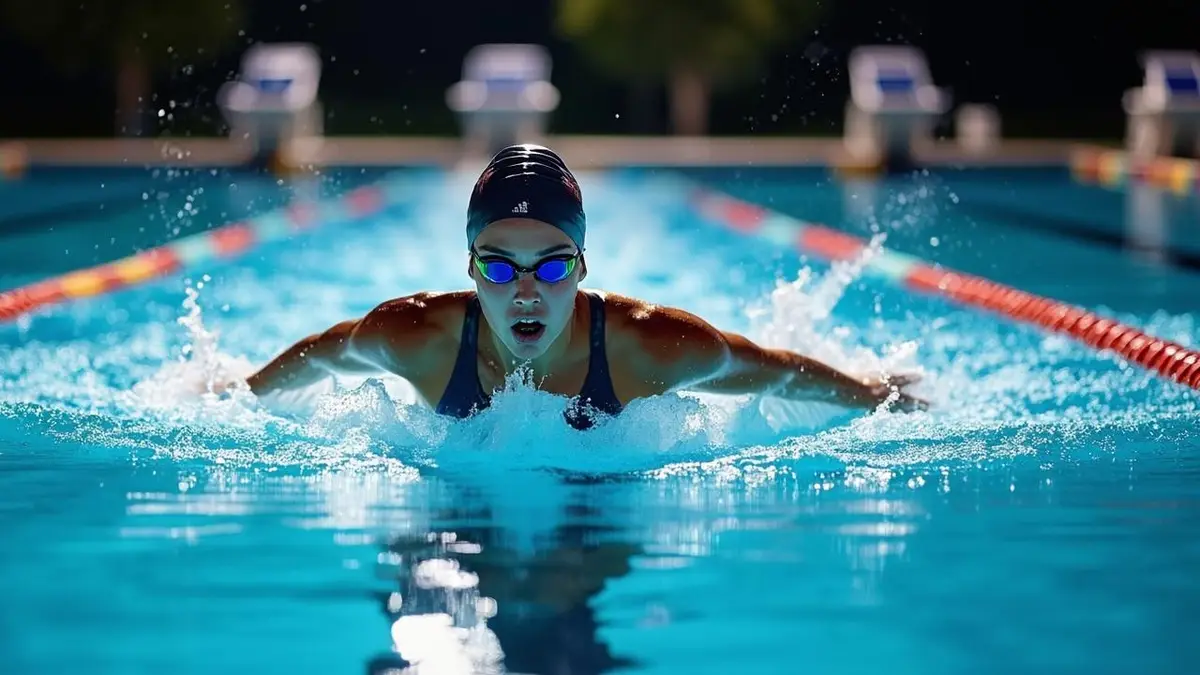
China’s Zhang Yufei won the women’s 50-metre butterfly at the Asian Games in Nagoya on Friday, defending her title in 25.41 seconds — and then used her post-race interview to answer the critics who had written her off.
“I saw a lot of people online saying Zhang Yufei is old and should step aside,” the swimmer said. “It just made me so unconvinced. At least let me try a few more times. I don’t feel like this is my true level.” The 28-year-old’s remarks quickly spread across Chinese social media, where fans praised her for answering doubters with a stopwatch rather than a statement. For an international audience unfamiliar with her, Zhang has been one of the faces of Chinese swimming for nearly a decade, a multi-time Olympic and world championship medallist known as much for her butterfly speed as for her outspoken personality.
The result was one of many highlights on a busy day for China at the Games. Gymnast Tian Hao won the men’s horizontal bar with a score of 14.700, holding off Japan’s Shinnosuke Oka and the Philippines’ Carlos Yulo. It was the 95th gold medal of the Games for the Chinese delegation, underlining the breadth of the country’s strength across sports from gymnastics to swimming to track.
On the track, Xie Zhenye advanced to the men’s 100-metre final, clocking 10.18 seconds to take second in his semifinal. The race produced a bigger story, though: Thailand’s Puripol Boonson ran 9.91 seconds in the same heat, breaking the Asian Games record of 9.92 set by China’s Su Bingtian in 2018. Another Chinese sprinter, Zeng Keli, also reached the final with 10.24. In the women’s 100 metres, Chen Yujie advanced as the fourth-fastest qualifier in 11.41 seconds, with the final scheduled for later in the evening.
In the pool, Zhang Zhanshuo closed out a remarkable Games by winning the men’s 400-metre freestyle in 3:41.28, a new Games record. It was his seventh gold of the competition. “One step short of perfect,” he said afterward, adding that he believed he could swim even faster. His comments reflected a theme running through the Chinese team: satisfaction with medals, but an appetite for more.
Not every result went China’s way. The women’s basketball team lost 85-80 to South Korea in the semifinals, missing out on the final despite 22 points and seven rebounds from the towering Zhang Ziyu and 17 points from Luo Xinyu. China shot zero for 13 from three-point range, a statistic that drew immediate scrutiny. “One game can’t represent everything,” head coach Gong Luming told reporters, explaining that the team’s plan to slow the pace and feed its dominant inside players broke down against aggressive Korean defence. Luo struck a more forward-looking tone: “Tomorrow is a new day. We will keep fighting for a better placing at these Games.”
Off the court, tennis fans in Beijing received disappointing news. Jannik Sinner, the world’s top-ranked men’s player, announced he was withdrawing from the China Open because of a knee injury. “My knee hasn’t recovered to where I want it to be, and I’m not ready to compete,” he said in a message to Chinese fans, promising to return next year. Sinner had already missed the US Open with the same problem.
The day captured the twin moods of a host-nation-style campaign: record-breaking wins, painful near-misses and athletes refusing to accept the limits others set for them. Zhang Yufei, for one, made clear she is not finished yet.