China's High-Dynamic E-Paper Aims to Rival the Printed Page
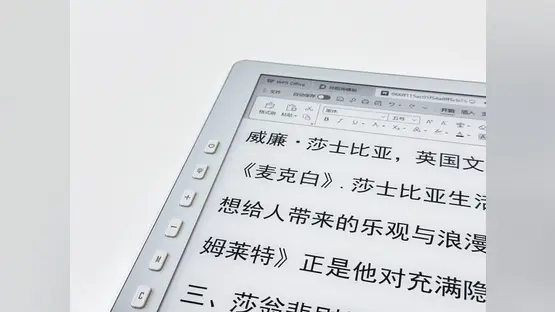
For two thousand years, paper has been the world’s most patient display. Before it, Chinese scholars wrote on bamboo slips too heavy to carry in quantity and on silk too expensive to waste. Paper, and later printing, fixed ink onto fibre and made text and images legible in ordinary daylight, at whatever angle the reader happened to hold them. Generations read by that light without the headaches and dry eyes that come with staring into a glowing panel.
That comfort is the promise now being revived under the name high-dynamic electronic paper, a display technology whose development is being reported in Chinese science coverage. The idea is not new: electronic paper has powered e-readers for years by reflecting ambient light rather than emitting its own. What has changed is the range. Conventional e-paper has been slow, largely monochrome and limited in how vividly it can render an image, which is why it never replaced the phone or the laptop screen.
The high-dynamic version pushes contrast, refresh speed and colour range toward something closer to print, while keeping the reflective principle that makes paper easy on the eye. The reference point in the coverage is not a laboratory curiosity but a lineage: the German physicist Karl Ferdinand Braun built the first cathode-ray tube in 1897, and display technology has spent more than a century trying to make artificial light behave like reflected daylight.
The appeal is practical. Reflective screens draw far less power than backlit panels because they do not have to outshine the room. They stay readable outdoors, where phones become mirrors. And they can hold an image without continuous refresh, which matters for signage, shelf labels, timetables and anything that must run for months on a small battery.
Where the technology goes next is less about reading novels and more about the surfaces people pass every day. Electronic shelf labels in supermarkets, bus-stop timetables, museum captions and wall-mounted art that can change with the season are all candidates. Each one replaces either paper that must be reprinted or a glowing screen that must be wired in.
The obstacles are familiar to anyone who has used an e-reader. Colour tends to look muted next to an OLED panel. Video playback can smear. Manufacturers must also convince buyers that a reflective screen is a feature rather than a compromise, at a moment when phone makers are chasing brightness and saturation instead.
Still, the direction of travel is telling. As screens multiply, the cost of emitting light everywhere keeps rising, both in electricity and in eyestrain. A display that works by reflecting what is already there reverses that logic. Whether high-dynamic electronic paper reaches shop shelves and bus stops in volume, or stays a specialist product for readers and signage, will depend on whether it can deliver colour and speed without giving up the quiet, paper-like calm that made the original so durable.