Apple's Touchscreen OLED MacBook Could Redefine the Laptop
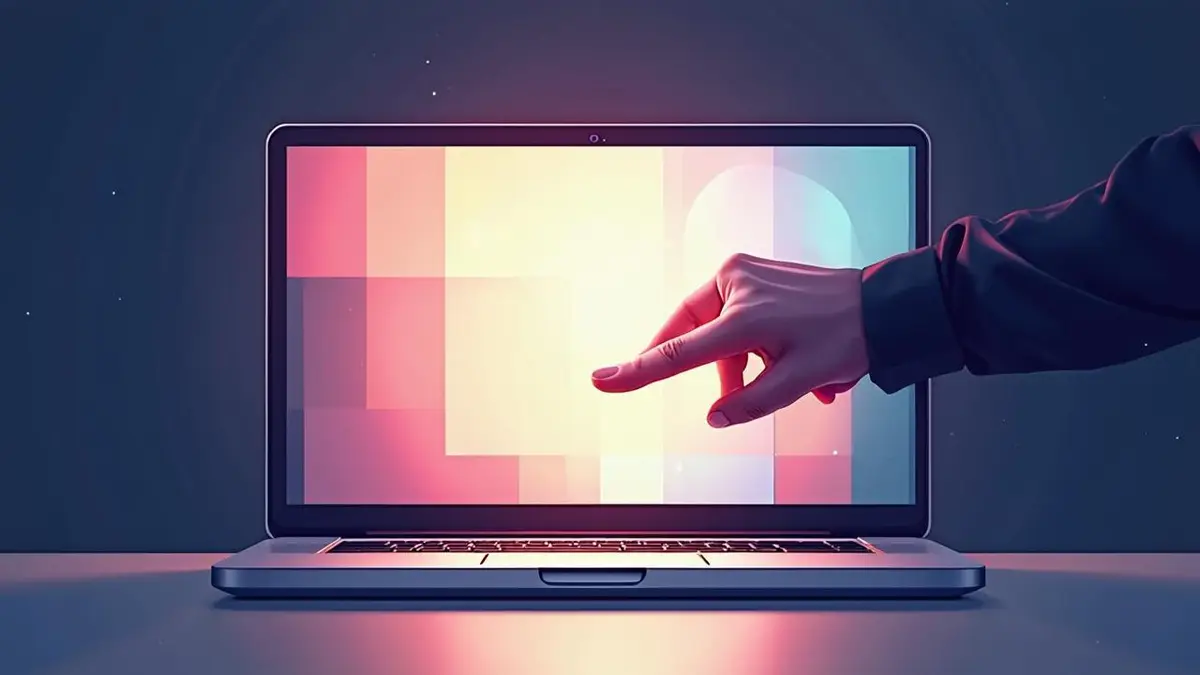
Apple’s next product event is shaping up around a single headline act: a MacBook with an OLED display and a touchscreen. The claim comes from a Chinese tech and lifestyle outlet previewing the launch, and if it holds, it marks the first time Apple has put a touch panel on a laptop. For a company that has spent years arguing that reaching up to poke a vertical screen is ergonomically wrong, that is a notable turn.
The appeal of OLED is easy to explain. Each pixel lights itself, so blacks are truly black and contrast is effectively infinite. Colors are richer, the panel can be thinner, and power draw drops when the screen shows dark content. Apple already uses OLED on the iPhone and the Apple Watch, and the technology has become the default for premium phones and many tablets. Putting it on a MacBook would close a gap that has widened as Windows laptops and Chromebooks moved to OLED years ago.
The touchscreen is the more interesting bet. A touch MacBook would blur the line between the Mac and the iPad, two product lines Apple has long kept deliberately separate. MacOS is built around a trackpad and pointer; iPadOS is built around fingers and a stylus. A touch laptop would need software that works both ways, and Apple has not yet shown how it would do that without making the desktop feel like a tablet with a keyboard bolted on.
For buyers, the practical questions are price and positioning. OLED panels cost more than the LCDs used in today’s MacBook Air and MacBook Pro, and a touch layer adds further expense. The most likely outcome is a premium model sitting above the current lineup rather than a wholesale replacement. That would mirror how Apple has introduced new display technology in the past: start at the top, then trickle down over several product cycles.
The timing fits a broader pattern in the laptop market. Competitors have spent the past few years pushing foldable and dual-screen designs, and touch has become standard on many premium Windows machines. Apple rarely moves first, but it tends to move decisively once it decides a category is ready. A touch OLED MacBook would be less an experiment than a statement that the laptop’s input vocabulary is expanding.
There are risks. Touch on a laptop has historically been a feature people try once and then ignore, because reaching across a keyboard is awkward. Apple’s answer would likely lean on the trackpad and keyboard as the primary input, with touch as a shortcut for creative apps, media browsing and quick gestures. Whether developers build for it is another matter, and that depends on how many of these machines Apple sells.
The event itself has not happened yet, so the details remain unconfirmed. But the preview points to a company willing to revisit old assumptions. A touchscreen OLED MacBook would not just be a spec bump; it would be Apple rethinking what a laptop is for, at a moment when phones and tablets have absorbed most of the casual computing people once did on a desk. For anyone who has watched the Mac and iPad converge for years, this is the clearest sign yet that the wall between them is coming down.