Global Botanic Gardens Hold 30% of Plant Diversity, But Two-Thirds Isn't Online
Walk into almost any city’s botanic garden and you see paths, glasshouses, labels. What you do not see is the collective scientific value of the world’s living plant collections — and a new paper argues that value is far larger than most people realize, and far less accessible than it should be.
The paper, published online in Nature Plants in early 2026 and led by Samuel F. Brockington of Cambridge University Botanic Garden, brought together dozens of institutions around the world. Its headline finding is striking: there are more than 3,500 recorded living plant collections globally, and together they manage at least 105,634 species — roughly 30 percent of all land-plant diversity.
That number matters because ex situ collections, plants grown outside their natural habitats, act as a kind of insurance policy. When a species is threatened in the wild, a botanic garden may hold the only living specimens left. Gardens also supply material for research on plant biology, conservation and climate adaptation.
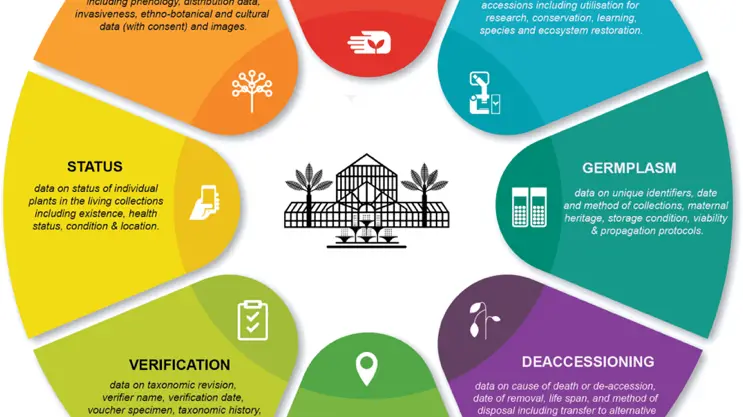
But the paper’s second finding is a warning. Up to two-thirds of these collections may not yet be digitized. In practice, that means records of which species are grown where, and how they are managed, may exist only on paper or in local databases that the wider research community cannot see.
A Chinese-language commentary on the paper, published on ScienceNet’s blog, suggests looking at the issue through the lens of imagery — asking what kind of global botanic garden this declaration constructs in the minds of peers and the public. The point is not merely bureaucratic. A garden that cannot be found in a database is hard to include in conservation planning, hard to compare with others, and hard to use as a resource for global research.
The commentary also notes the ambition behind such a global survey: it is not just a stocktake but a call to action, inviting gardens to think of themselves as a networked scientific infrastructure rather than a set of separate tourist attractions.
For readers outside the field, the practical takeaway is simple. The next time you visit a botanic garden, the plants in front of you may be part of a global collection that is both more important and more fragile than its tidy beds suggest. Digitizing these collections would be a quiet but powerful investment in understanding and protecting plant life.
The paper’s authors and the broader community of gardens now face a clear task: turn a scattered, partly invisible archive into a shared scientific resource before the gaps become permanent.