The Brain Switch Idea That Was Mocked, Then Won a Nobel
Inside every human skull sits a tangled electrical network weighing about 1.3 kilograms. It stores childhood memories, keeps the heartbeat steady, sets the rhythm of breathing and decides when we sleep. For much of the 20th century, scientists knew roughly which brain regions handled which jobs, but their tools were blunt. The pictures they produced looked like a photograph taken through frosted glass — you could see broad shapes, never individual cells at work.
The dream was simple to state and almost impossible to build: give one chosen type of neuron its own light switch. Flip it on, and that cell fires; flip it off, and it goes quiet. Then watch what the animal does. If switching on a handful of cells produces fear, hunger or a memory, you have proof that those cells cause that feeling — not merely correlate with it.
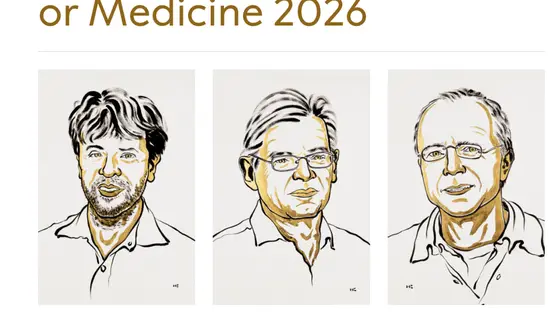
That dream has now been rewarded with the highest honour in science. Three researchers shared this year’s Nobel Prize for work that turned the idea into a standard laboratory method used around the world. What makes the story striking is how the project began. Colleagues once treated the proposal as a punchline, the kind of thing people mention at conferences to get a laugh. Getting a foreign gene into specific brain cells, and making those cells respond to light, sounded less like neuroscience than science fiction.
The path forward came from borrowing. Researchers took light-sensitive proteins from microbes — organisms that use them to sense their environment — and delivered the genetic instructions into chosen neurons. Shine a thin fibre of light into the brain, and only the targeted cells react. The technique spread quickly because it answered a question that had frustrated the field for decades: not where activity happens, but what activity does.
Since then, laboratories have used the approach to trace circuits behind memory, addiction, sleep and movement. It has helped map how a fleeting experience becomes a lasting memory, and how damaged circuits might one day be retuned. The method is now a workhorse of modern neuroscience, appearing in thousands of studies and in the training of a generation of researchers.
The prize also carries a quieter lesson about how science actually moves. Big breakthroughs rarely arrive fully formed. They start as an odd question that nobody can fund, survive years of scepticism, and only later look obvious in hindsight. The three laureates kept working while their idea was unfashionable, which is precisely why it eventually became indispensable.
For the public, the practical payoff is still unfolding. Understanding which cells drive which behaviours could shape future treatments for conditions such as Parkinson’s disease, chronic pain and severe depression. None of that is guaranteed, and translating animal findings into human therapies remains slow, careful work.
What is already clear is the shift in perspective. The brain is no longer a mysterious whole that scientists can only observe from outside. It is a circuit board they can probe, cell by cell, question by question. An idea once dismissed as a joke has become one of the sharpest tools we have for understanding ourselves — and this year, the sceptics got their answer.