Hengdian's AI Question: When Machines Learn to Play Every Role
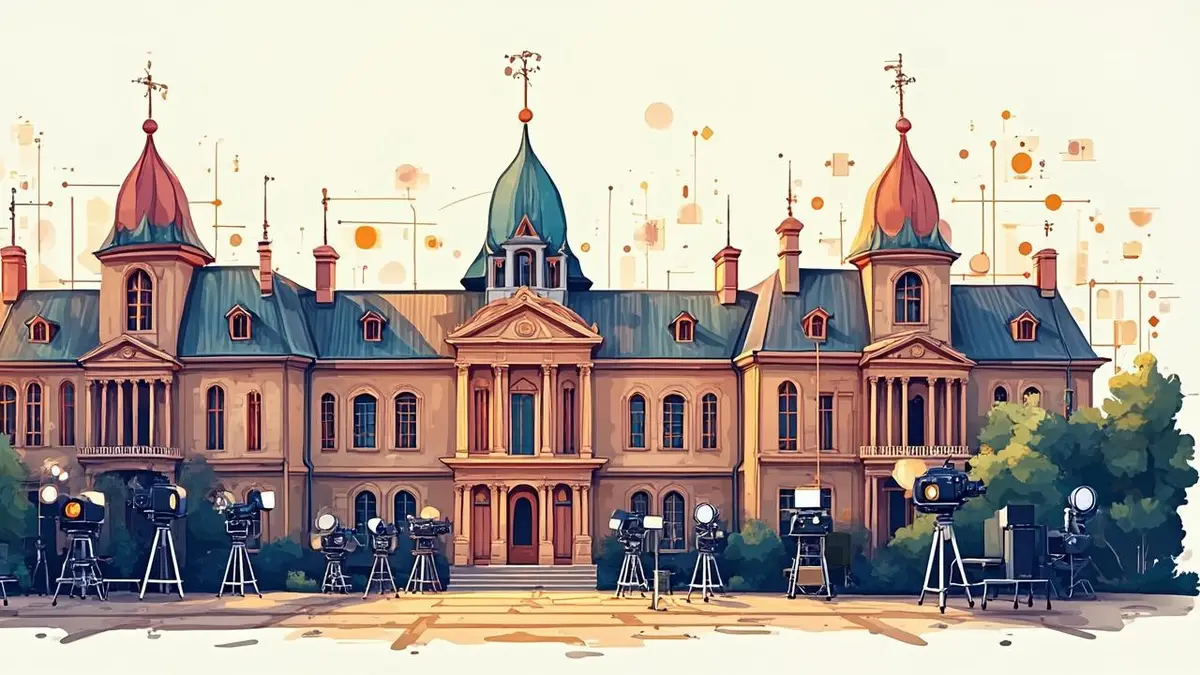
A short post on a popular Chinese forum put a blunt question to its readers: has Hengdian’s good fortune run out? The town, a few hours south of Shanghai in Zhejiang province, is China’s largest film and television production base, a place where dozens of costume dramas, period epics and streaming series are shot at any one time. Its streets are replicas of imperial palaces, Republican-era Shanghai and ancient market towns, and its economy runs on crews, extras, caterers and hotels. The post’s second line was darker: humans, it suggested, have also lost badly when it comes to making drama.
The anxiety is not hard to understand. AI video tools have improved quickly over the past year, and Chinese studios have begun using them for storyboards, short promotional clips and even full short dramas. For a town whose business model depends on physical sets and large crowds of background performers, the question of what happens when a model can generate a convincing palace courtyard or a crowd scene is not abstract. Hengdian has already been experimenting with AI, and local production companies have talked openly about using the technology to cut costs on effects and post-production.
What makes the discussion interesting is that Hengdian is not only a production hub. It is also a tourist destination, selling the fantasy of filmmaking to visitors who pay to walk the same streets where their favourite dramas were shot. That side of the business depends on the visible apparatus of production: cameras, cranes, costume racks and, above all, people. An AI-generated drama has no backlot to visit, no extras eating lunch in the shade, no actor waving to a tour group between takes.
The forum post did not offer data, and it would be wrong to read it as evidence of collapse. Hengdian’s advantages remain real: permits, crew depth, suppliers and a cluster of studios that no single AI model can replace overnight. But the post captured a mood that has been building across China’s entertainment industry, where short dramas made with AI have multiplied and prices for AI-produced video have fallen sharply. The same debate is playing out in animation, advertising and online literature.
For the thousands of people who work in Hengdian as extras, technicians or small-service providers, the practical question is less philosophical. If producers can shoot fewer days on location, the ripple runs through dormitories, canteens and van rentals. The town has survived previous shifts, from the rise of streaming to the boom in short dramas, by renting its sets to whoever needs them. Whether it can do the same with AI depends on whether the technology creates new kinds of production work or simply removes the old ones.
The forum post ended with a shrug rather than an answer, which is probably honest. What is clear is that the conversation has moved from whether AI can make watchable drama to what that means for the places built around making it by hand. Hengdian, with its fake palaces and real payrolls, is where that question will be answered first.