China's Mid-Tier Short-Drama Apps Fight for Survival as Two Giants Dominate
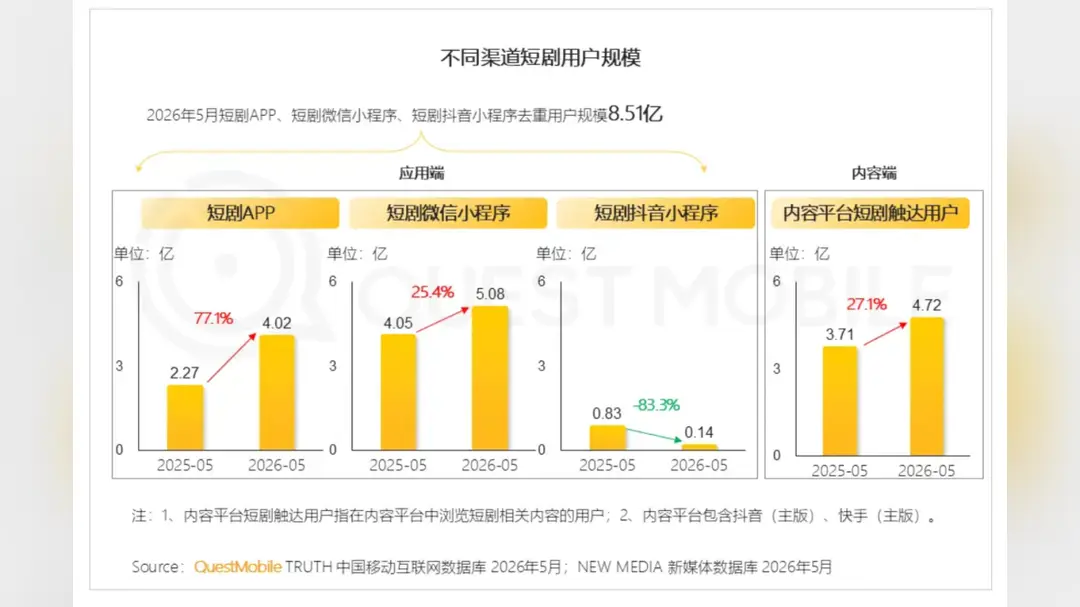
China’s short-drama boom has produced a clear hierarchy. According to a recent ranking from the data firm QuestMobile, two apps — Hongguo (Red Fruit) and a rival known as Lüpaopao (Green Bubble) — have pulled so far ahead in monthly active users that the rest of the field looks like a different market. The gap is not incremental. It is described in Chinese tech coverage as a cliff, with the leaders in a league of their own and a long tail of mid-tier apps slipping out of users’ sight.
The two leaders are easy to describe and hard to compete with. Hongguo is backed by ByteDance, the company behind Douyin, China’s version of TikTok. Lüpaopao is operated by Kuaishou, a short-video platform with a massive user base of its own. Both can push short dramas to viewers who are already scrolling video feeds, and both have the data to tune stories, episode length and cliffhangers to keep people watching. For a smaller app, buying traffic is expensive and building a habit from scratch is harder still.
That leaves the middle tier in an awkward spot. These apps typically lack the distribution of a giant feed, the production budget of a top studio, or a distinctive brand. Some have tried to specialise — in romance, revenge plots, or regional comedy — but the hits that drive downloads tend to be copied quickly. When a genre works, the leaders can produce more of it and promote it more aggressively. The result, as one industry account put it, is a squeeze: too big to be ignored, too small to set the agenda.
The business model adds pressure. Short dramas usually earn money through micro-payments — viewers pay a few yuan to unlock the next batch of episodes — and through advertising. That model rewards scale: the more users an app has, the more it can spend on acquiring new ones and the better its data on which hooks convert. Mid-tier apps face the same production costs without the same audience to spread them across. Consolidation, licensing deals or a retreat into niche genres look like the realistic paths.
The stakes are larger than one app. Short dramas have become one of the fastest-growing corners of Chinese entertainment, with vertical, phone-first series that run for a few minutes per episode. They have drawn established actors, spawned AI tools for script and video production, and prompted debate about quality and screen time. A market that consolidates around two platforms will shape what gets made, how long episodes run and how much viewers pay.
For global readers, the pattern will look familiar. It mirrors what happened in streaming, mobile games and food delivery: a land-grab phase, a wave of entrants, then a shakeout in which distribution and capital decide the winners. China’s short-drama market is now in that shakeout. The QuestMobile ranking is one snapshot, but it points to a simple question for every mid-tier app: what can you offer that a giant’s feed cannot?
What happens next will show up in the numbers. Watch whether the leaders’ monthly active user totals keep widening the gap, and whether any mid-tier app finds a genre or format that the giants are slow to copy. Also watch pricing: if micro-payment rates fall as competition intensifies, even the leaders will feel it.