Why Do We Find Insects Ugly? A Chinese Science Writer Explains
It is one of those questions that sounds like a joke until you think about it: why didn’t insects evolve to be cute, so humans wouldn’t want to squash them? The question, posed on the Chinese question-and-answer platform Zhihu, has drawn a long and surprisingly serious answer from a science writer who argues that we have the logic backwards.
The writer’s key point is that insects did not fail to become adorable. Rather, humans evolved to find certain traits unpleasant because those traits once signaled danger. Disgust is not a verdict on beauty; it is a rapid risk assessment. A creature that bites, stings, spoils food or carries disease triggers an instinct that arrives before conscious thought, much like the immune system reacting to a pathogen. Psychologists sometimes call this behavioral immunity, a mental first line of defense that keeps us away from sources of infection.
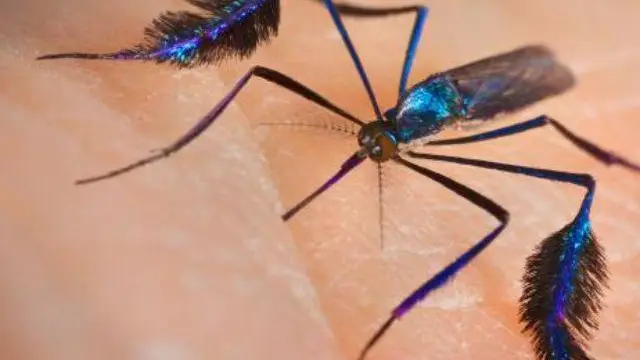
To test the idea, the essay offers a striking example: the sapphire mosquito, a real species with shimmering blue scales and feathery legs that many people would call genuinely beautiful. Yet if it landed on your arm, you would still swat it without hesitation. The instinct overrides the aesthetic. That, the writer says, is the whole argument in miniature.
This is not to say insects are dull. The same platform has hosted a thread about creatures that look as if they were generated by artificial intelligence, and the winner was a marine organism shaped like a perfect twelve-sided geometric solid, a symmetry so rare in nature that it seems impossible. Elsewhere, Chinese readers have debated why male animals are often more colorful than females while human beauty norms run the other way, with one contributor offering a memorable shorthand: the plainer parent tends to be the one that does the child-rearing.
These conversations share a theme that runs through much of Chinese popular science writing today. Readers are not just collecting facts; they are looking for frameworks that make the natural world feel coherent. Why does a chicken bob its head when it walks? Why did eggshells lose their color in supermarket cartons? Why do some species seem designed by a committee? Each question becomes a small lesson in evolution, perception and the limits of human intuition.
The insect question also touches something older. In classical Chinese art and literature, insects have long been observed with close attention rather than affection. Crickets were kept for their song, cicadas for their symbolism of rebirth, and painters rendered moths and beetles with the same care given to plum blossoms. The appreciation was aesthetic and sometimes philosophical, but it rarely required the animal to be lovable.
That may be the most useful takeaway. Cuteness is not a universal standard that nature failed to meet. It is a human response, shaped by survival, culture and the particular nervous system we happen to have inherited. Insects are not waiting to be redesigned. They are simply living at a scale and logic of their own, and the discomfort they provoke says more about us than about them.