Why Chicken Head Bobs Look Like Teleporting, Explained
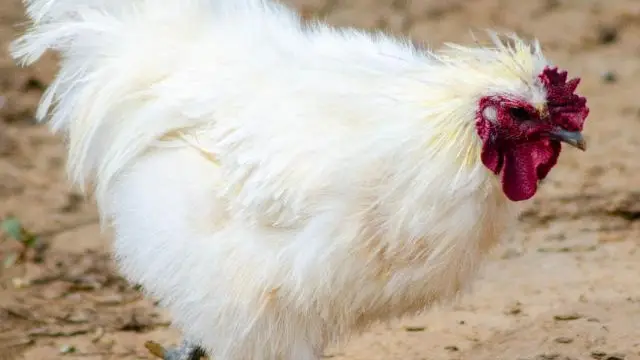
Watch a chicken walk and you will see something odd. Its head does not glide forward the way a person’s does. It snaps ahead in little jumps, as if the bird were blinking through space one frame at a time. Most of us assume the chicken is deliberately whipping its head around. A popular explainer circulating on Chinese social media this week argues the opposite: the chicken is working hard to keep its head still, and the jerky motion is just the seam between two periods of steadiness.
The key is a reflex called vestibulo-ocular stabilization, which humans have too. Imagine riding a bus and watching an advertising board slide past the window. Without thinking, your eyes lock onto the board and track it, then flick to the next one. Your gaze moves in jumps, not a smooth sweep, and your brain edits out the blur so the world feels continuous. The chicken does the same thing with its whole head, because its eyes sit on the sides of its skull and cannot swivel much inside their sockets.
So when the body moves forward, the head stays fixed in space for a moment, anchored to whatever it was last looking at. Then, as the neck stretches to its limit, the head shoots forward to a new anchor point. Repeat that a few times per second and you get the stop-motion effect people describe as teleporting. The bird is not being twitchy. It is buying itself a stable image of the world while its legs carry it along.
This matters more for a chicken than for a person. A bird that pecks at seeds, grit and insects needs to judge distance precisely, and a bouncing viewpoint makes that hard. By holding its head level and still between steps, a chicken gets a steadier read on what is edible and what is a threat. Researchers who study bird vision note that the same principle helps pigeons, herons and other species that walk with a nodding gait.
There is a second, less obvious benefit: the head-bob rhythm is tied to breathing and to the mechanics of walking on two legs. A bird’s body pitches slightly with each stride, and the neck absorbs that pitch so the brain and eyes stay level. In a sense, the chicken’s neck is a suspension system. The head does not move because the bird wants to look around. It stays put because the rest of the body is moving underneath it.
Chinese readers responded to the explainer with the usual mix of delight and mild disbelief. Some said they had watched chickens their whole lives without ever noticing the pattern. Others pointed out that the same illusion shows up in film: a camera operator walking with a stabilizer keeps the frame locked while the operator’s legs pump away. The chicken, in other words, has been doing handheld cinematography for millions of years.
If you want to see it for yourself, the trick is to stop watching the head and watch the background instead. Pick a fence post or a stone behind the bird, and you will notice the head holds its position against that landmark while the feet keep stepping. The moment the neck runs out of slack, the head leaps to a new reference point. What looks like a nervous tic is really a small feat of engineering, repeated with every step a chicken takes.