China's Favorite Sweetener Swap: Why High-Fructose Syrup Sparks Debate
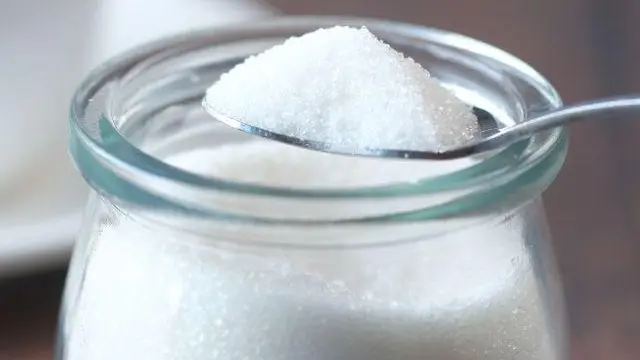
A quiet argument has been simmering in Chinese supermarkets and on social feeds: why does so much of the country’s packaged food and drink use high-fructose corn syrup instead of the plain white sugar that older shoppers remember? The question resurfaced this week after users on the Q&A platform Zhihu and elsewhere began calling for manufacturers to put white sugar back into ingredient lists, treating the old-fashioned sweetener as a kind of lost ideal.
The chemistry is simple enough. White sugar, known as sucrose, is a molecule made of one glucose unit and one fructose unit locked together. High-fructose corn syrup, often shortened to HFCS, contains the same two sugars but in free form, not chemically bonded. The most common version used in drinks is roughly half fructose and half glucose, close to the balance found in table sugar, which is why food scientists have long argued the two are nutritionally similar in small amounts.
The real difference lies in how they are used. Corn syrup is cheaper, sweeter per unit of cost, mixes easily into liquids and helps keep baked goods soft and moist for longer. For a beverage or snack maker watching margins, that combination is hard to resist. White sugar, by contrast, costs more and behaves differently in industrial recipes, so swapping back is not as simple as changing a label.
That economic logic does not satisfy everyone. The Zhihu discussion, which drew science teachers and nutrition writers into the comments, focused less on sugar versus syrup and more on how much of either people now consume. One widely shared answer pointed out that fructose is metabolized mostly in the liver, and that heavy, sustained intake has been linked in research to fatty liver, rising uric acid and insulin resistance. The same caveat applies to ordinary sugar, the writer noted: the dose, not the name on the packet, is what matters.
Nostalgia plays a role too. For many Chinese consumers who grew up before the 2000s, white sugar was a rare luxury, rationed and precious, while corn syrup arrived later as an industrial shortcut. Calling for its return is partly a way of saying that food should taste like it used to, and that ingredient lists should be short enough to read aloud. The phrase “white moonlight,” used online for an idealized first love, has been borrowed to describe the humble sugar bag.
Food and beverage companies have noticed. Some juice, dairy and bakery brands now advertise “no high-fructose corn syrup” on packaging, and a few have reformulated to use cane sugar, honey or fruit concentrates. Whether those versions are healthier is debatable; several contain just as much total sugar. Chinese dietary guidelines still advise limiting added sugars overall, and public health campaigns increasingly push plain water and unsweetened tea.
The debate is unlikely to end with a winner. Corn syrup will stay cheap and useful, white sugar will stay familiar and comforting, and consumers will keep reading labels more carefully than they did a decade ago. What has changed is the conversation itself: shoppers in China now treat ingredient lists as a subject worth arguing about, which is its own kind of progress.