Why Ancient Doctors Beat Infection Without Antibiotics
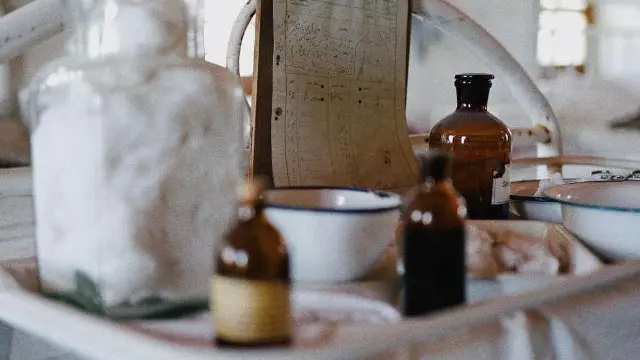
It is easy to assume that before antibiotics, a wound infection was simply a death sentence and doctors could do nothing but watch. A widely shared essay by a Chinese physician, writing under the pen name Shoudou Mao Dafu, argues the opposite: the core principles of infection control were largely figured out long before penicillin ever existed.
The first and most important of these is debridement and drainage. Ancient doctors on both sides of the world had no idea that bacteria existed, but they noticed a consistent pattern through experience: when dead tissue, foreign objects or pus stayed inside a wound, the patient often died. So they cut away the dead and damaged flesh, opened the wound so it could drain, and cleaned it thoroughly. The logic was brutal but effective, and it is essentially the same logic surgeons follow today.
Sterilization and disinfection came next. Long before germ theory was proven, physicians had already worked out that a dirty knife, dirty hands or dirty dressings made wounds worse. Ancient practitioners used heat, boiling water, alcohol, vinegar and other agents to clean their instruments and their hands. They also learned to keep wounds covered with clean cloth and to change dressings regularly. None of them could have explained why it worked, but the pattern was clear enough to pass down through generations of apprentices.
Isolation was another early discovery. When a wound smelled foul or produced copious pus, experienced doctors separated that patient from others, recognizing that something could spread. Hospitals in medieval Europe and in parts of Asia developed separate wards for infected patients, a practice that looks strikingly modern in hindsight.
The essay also points out that many of these techniques were not uniquely Western or Eastern. Chinese medical texts describe cleaning wounds, removing foreign matter and applying herbal antiseptics. European surgeons wrote about the same problems in their own traditions. The solutions converged because the human body responds the same way everywhere, and because practical results, not theory, decided what survived.
What antibiotics added was speed and reach. They could kill bacteria inside the body, which no amount of washing could do. But the essay stresses that antibiotics never replaced the older principles. Modern surgery still depends on sterile fields, careful debridement, drainage tubes and isolation of infected patients. When these basics are skipped, even the strongest drugs often fail.
The author’s broader point is about how medical knowledge actually grows. Progress rarely looks like a single genius moment. More often it is a slow accumulation of observations, many of them made by people who had no idea why their methods worked. The history of infection control is a reminder that practical wisdom can run ahead of scientific explanation by centuries, and that old techniques are sometimes vindicated rather than discarded.
For global readers, the essay is a compact window into how medicine became modern. It also offers a useful corrective to the idea that everything before antibiotics was ignorance and helplessness. In reality, much of what we now call surgical hygiene was already in place, waiting for chemistry to catch up and finish the job.