Why Your Brain Wakes You Up Before the Alarm Rings
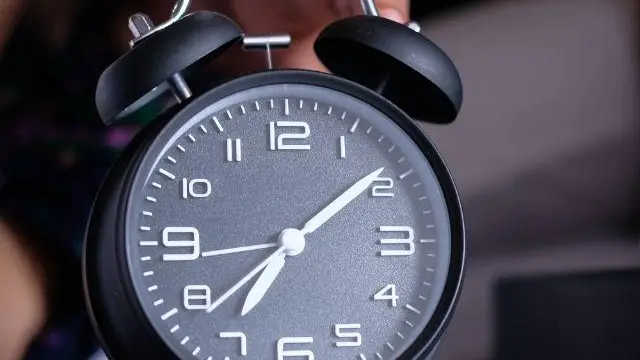
It happens to a lot of people: you set an alarm for six, and at 5:52 your eyes simply open. Is it luck, or does the body actually keep time? A widely shared Chinese science explainer took the question seriously, and the answer is more interesting than the folklore. Experiments dating back to 1999 put the phenomenon in a sleep lab: when volunteers went to bed knowing what time they needed to rise, their bodies began preparing roughly an hour before that target.
The mechanism, as the explainer lays it out, works on two levels. The first is the circadian clock — a daily biological rhythm that raises and lowers hormones, body temperature and alertness on a schedule largely set by light, meals and habit. That clock is always running, whether or not you have plans. The second level is anticipation: the simple act of deciding “I must be up at six” becomes a kind of instruction the sleeping brain keeps executing overnight, nudging the body toward lighter sleep and readiness before the alarm sounds.
That second layer is why the effect is often described as the brain “doing math” while you sleep. It isn’t conscious calculation. During the night the body cycles through deep and light sleep stages, and as morning approaches, the sleep architecture tilts toward lighter phases anyway. The expectation of a wake-up time appears to sharpen that tilt, so you surface into wakefulness just before the noise begins.
This helps explain a familiar frustration: the trick works best when the wake-up time is unusual. If you always get up at seven, the clock alone can handle it and you may sleep right through until the alarm. Set the alarm for an hour earlier than usual, and the anticipation effect often kicks in — sometimes so well that you wake too early and lie there waiting.
It also explains the flip side. On mornings with nothing scheduled, many people sleep longer and more deeply, because there is no instruction for the brain to act on. And when the anticipation misfires — a big meeting, an early flight — the result can be broken sleep, as the mind checks the clock repeatedly instead of resting.
Sleep researchers quoted in the piece caution against treating this as a party trick. The body’s internal timing is a real system, shaped by consistent habits, and it can be trained. Going to bed and waking at steady hours strengthens the circadian signal. Bright light in the morning and dim light at night help set it. Irregular schedules, late screens and shifting weekend lie-ins blur it, which is why Monday mornings feel so brutal.
For anyone who regularly wakes just before the alarm, the practical takeaway is reassurance rather than alarm: it is not insomnia, and it is not a sign of an anxious mind. It is the body doing what bodies do — tracking time, preparing for the day and, occasionally, getting you up a few minutes early with no help from a machine.
The original question, posed on a Chinese Q&A platform, drew thousands of readers comparing notes. Some said they could reliably beat the alarm by two minutes; others said the phenomenon vanished the moment they stopped caring about the time. Both responses fit the science. The body keeps time best when it knows there is somewhere to be.