China's Auto Industry Hits Reset as Deals and Alliances Shift
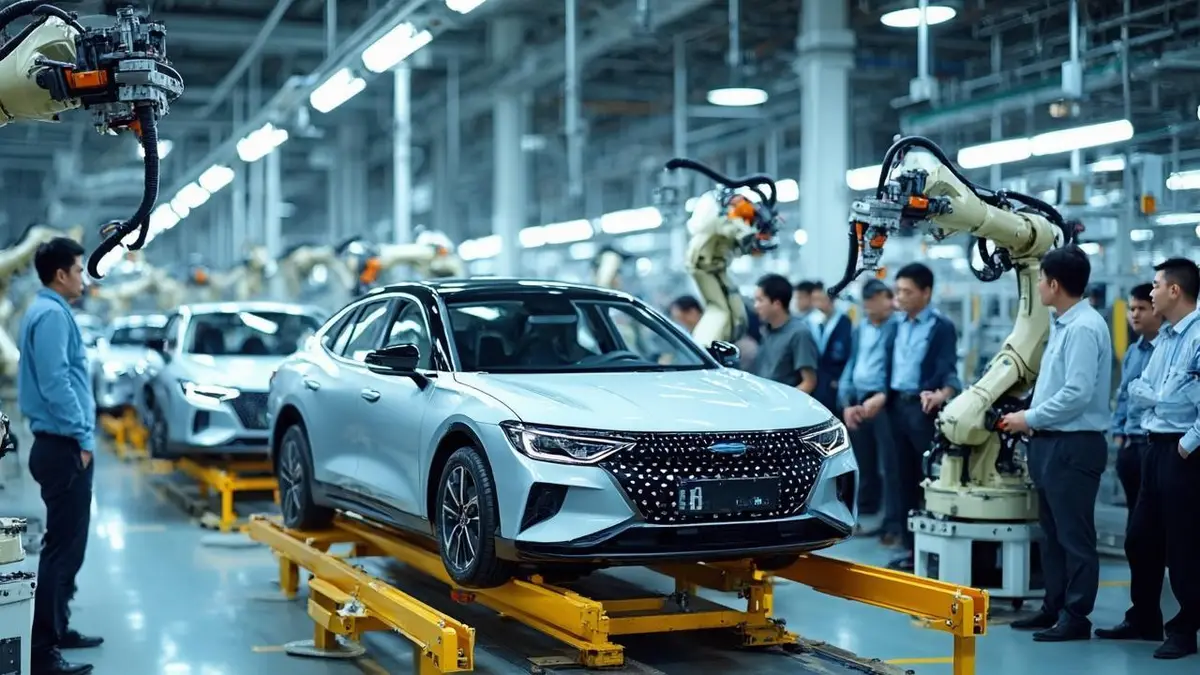
China’s automotive industry rarely stands still, but the past week has delivered an unusually dense cluster of signals about where it is heading. On September 23, Dongfeng Motor’s general manager Feng Changjun traveled to Shenzhen to meet Huawei founder Ren Zhengfei. Afterward, Dongfeng relayed Ren’s message: Huawei will not make cars itself, but it is happy to lend its intelligent-technology expertise to help Dongfeng build better ones. The remark quickly trended on Chinese social media, reinforcing a boundary that Huawei has repeated for years even as its automotive partnerships deepen.
The Huawei question sits at the center of a broader realignment. Yu Chengdong, the executive who leads Huawei’s consumer and automotive initiatives, publicly explained a recent adjustment to the company’s smart-car partnership model. He said the partner automaker Seres had proposed taking a more independent role, and that Huawei would now concentrate on its four remaining brands under the HIMA umbrella. For global readers, the takeaway is simple: Huawei is positioning itself as a supplier of software, chips and intelligent-driving systems rather than a vehicle manufacturer, a strategy that lets it work with multiple carmakers without competing against them.
Battery strategy is shifting too. Porsche announced it has achieved battery cells made entirely from recycled raw materials, a milestone that speaks to the industry’s push to reduce dependence on newly mined minerals. Meanwhile, General Motors’ decision to sell its stake in a joint-venture battery plant to Samsung SDI, reported earlier this year, is being read in Chinese industry circles as a cautionary tale about the capital intensity of making cells in-house. The lesson many analysts draw is that not every automaker can or should own the entire battery supply chain.
Exports remain the sector’s most powerful engine. China shipped more than seven million vehicles abroad in 2025, topping global rankings for a third straight year, and monthly export volumes have repeatedly crossed the one-million mark in 2026. BYD’s factory in Thailand recently rolled out its 100,000th new-energy vehicle, a symbol of how Chinese manufacturers are building local production footprints rather than simply shipping finished cars. Yet going global is not frictionless; adapting to different regulations, consumer tastes and service networks is now described by industry observers as a kind of survival threshold.
At home, the market is cooling even as competition intensifies. Data from the China Passenger Car Association showed retail sales of passenger vehicles fell sharply in the first twenty days of September compared with a year earlier, even as they rose from the previous month. The slowdown is prompting consolidation talk. Analysts point to recent moves, including Geely’s leadership change and major asset restructuring announcements from state-owned automakers, as signs that a new wave of industry shakeout may be approaching.
Product launches continue regardless. Chery revived its iconic QQ nameplate with a modern electric version priced under 90,000 yuan, packed with a large central screen and advanced driver-assistance features. Li Auto delayed the launch of a new model to late October, and Mercedes-Maybach refreshed its flagship sedan. Tesla, for its part, has begun commercial robotaxi service with its purpose-built Cybercab in Austin, Texas, a development Chinese readers are watching closely as their own cities experiment with autonomous ride-hailing.
Even the calendar is changing. The China Council for the Promotion of International Trade’s auto branch announced that Beijing will add a new international exhibition in 2027 focused on next-generation vehicles and future mobility, running alongside the traditional auto show. It is a small scheduling detail that reveals a larger ambition: China wants to be not just the world’s factory for electric cars, but the place where the next chapter of mobility is defined.
For global readers, the common thread is that China’s auto story is no longer only about volume. It is about alliances, recycling, overseas plants, software-defined vehicles and the painful but necessary process of separating winners from also-rans. The next twelve months should make clear who is positioned to lead.