A Provincial Folk Show Turns Bronze Age Relics Into Stage Props
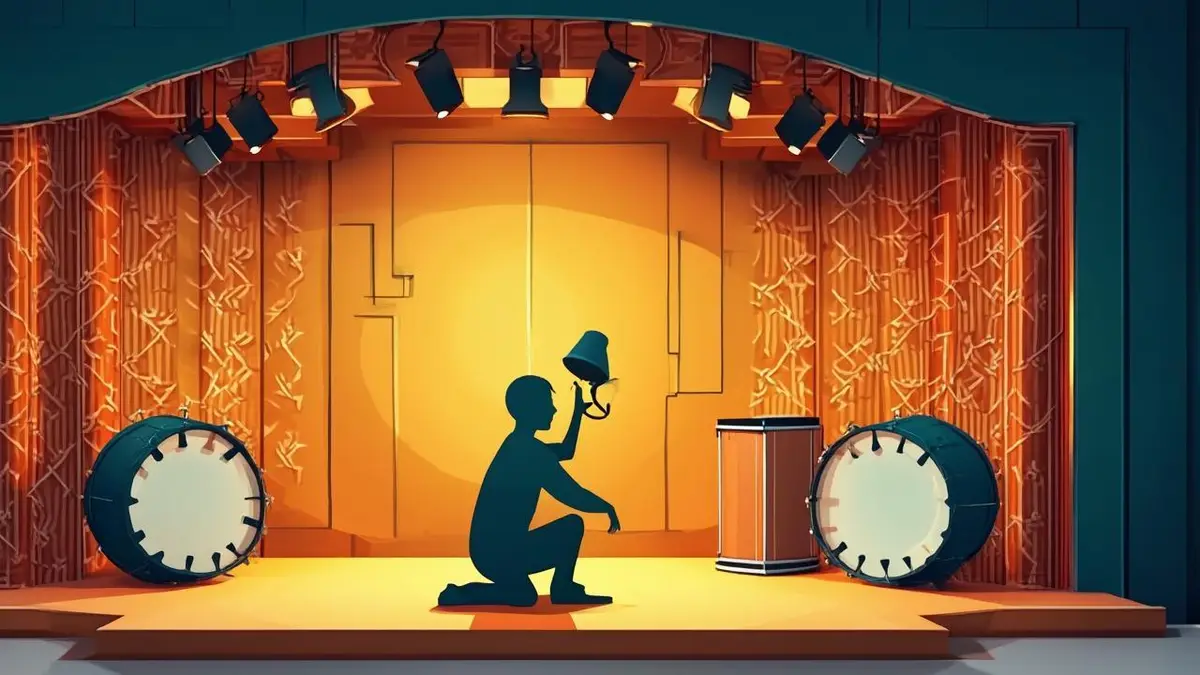
Rehearsals are under way in Hebei province for the sixth edition of its ethnic minority arts festival, and the backstage area has become the most photographed part of the theatre. Costumes carry patterns copied from Zhongshan seal script, the elegant bronze-lettered writing associated with the ancient Zhongshan state that once occupied parts of what is now Hebei. Drums modelled on Warring States designs sit beside props inspired by the Changxin Palace Lamp, a gilded bronze oil lamp in the shape of a kneeling attendant, unearthed in 1968 from a Han dynasty tomb in Mancheng county and now one of the province’s best-known antiquities.
A presenter from a regional news outlet walked through the southern division’s rehearsal on 27 October. According to the report, the auditorium was already busy before the performance began, and the backstage area was dense with what the broadcast called ethnic symbols — textiles, instruments and objects drawn from museum collections rather than from a props warehouse.
The framing the organisers have chosen is not hard to read: the objects are meant to tell a story of ethnic unity and a shared attachment to home and country, in the phrase used in the coverage. That is the standard vocabulary of these provincial festivals, which exist to showcase the music, dance and costume of ethnic minority communities alongside mainstream regional performance.
The interesting question is what happens to the artefacts. The Changxin Palace Lamp is a delicate object with a hinged shade that could direct light and a body designed to channel smoke into a reservoir — a piece of engineering as much as sculpture. On stage it becomes something a dancer can carry. The Zhongshan script, a decorative bronze inscription style that most Chinese readers cannot read today, becomes a print on fabric. The drums become rhythm.
That transformation is a familiar move in Chinese cultural programming, which has spent several years pulling museum collections into television, stage and tourism. The risk is that heritage becomes wallpaper; the opportunity is that an audience of a few thousand in a provincial theatre meets an object it would otherwise only see behind glass in Shijiazhuang.
Hebei’s ethnic minority population is comparatively small by Chinese standards, but the province borders Inner Mongolia and hosts Hui, Manchu and Mongolian communities, among others. A festival of this kind is partly a platform for those groups and partly a showcase for the province’s own deep history — the Zhongshan state, the Han tombs at Mancheng, the bronze and jade work that fills its museums.
Details on the programme, ticket availability and the final performance dates were not part of the report, and the festival is a regional event rather than a national broadcast. But the rehearsal footage suggests the production is leaning hard on visual spectacle: period costume, large drums, dramatic lighting and a stage design built around recognisable relics.
For outside viewers, the takeaway is less about any single performance than about method. Provincial arts festivals increasingly work as heritage translators, taking objects that require a museum label and giving them a beat, a costume and a spotlight. Whether that reads as genuine cultural continuity or as set dressing depends on how carefully the borrowing is done — and on whether the audience leaves knowing what the lamp actually was.