Fallen Idol: Chinese Pop Legend Liu Huan Dies at 63
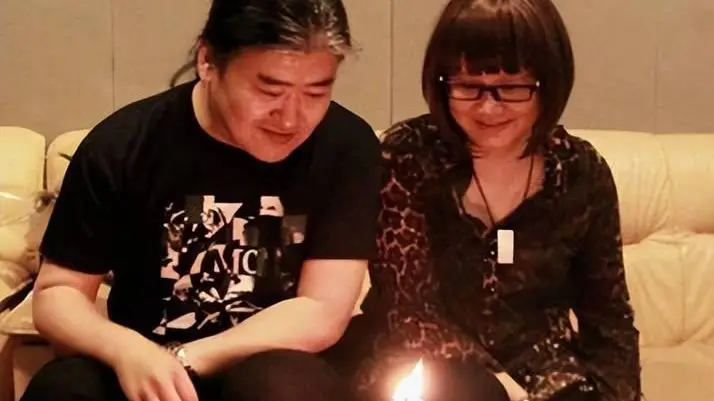
For three decades, Liu Huan’s voice was the sound of China’s biggest moments. On September 25, the singer and longtime university teacher died in Shanghai at 63, according to an obituary from the University of International Business and Economics, where he was a retired faculty member. His family asked for a quiet farewell without a public memorial.
To international audiences, Liu is best known for the soaring theme of the 2008 Beijing Olympics, You and Me, a duet performed at the opening ceremony that introduced his warm, unhurried baritone to a global television audience of hundreds of millions. At home, his catalog runs deeper: a string of television drama themes and pop ballads from the 1990s and 2000s that made him a fixture in family living rooms, karaoke boxes and music textbooks.
He was not a typical pop star. Born into an academic family, Liu studied French literature before music became his life, and he spent years as a professor, teaching Western music history to undergraduates in Beijing. Students remembered a teacher in plain black shirts who sang softly in class and rarely gave interviews. “He stood on stage in black, calm and unhurried, and the whole room settled down,” one tribute circulating online said.
That restraint made the aftermath of his death more jarring. Within days, several self-publishing entertainment accounts revived a rumor from roughly 22 years ago, tying Liu to an alleged affair with a student, a claim that had long since faded. The story resurfaced with provocative keywords about his wife and private life. Some posts also dug into the lives of his daughter and son-in-law, whose identity, they claimed, was “no ordinary person.”
The reaction from readers was swift and largely disgusted. Comment sections filled with demands to let the dead rest, and several outlets pointed out that the rumor had never been substantiated. The episode has become a small case study in how China’s entertainment gossip economy works: when a beloved figure dies, traffic-hungry accounts rush to repackage old scandals, because grief and outrage both generate clicks.
Liu’s death also renewed discussion of what he meant to Chinese music. Fans noted that he bridged generations, singing folk-tinged ballads in the 1980s and later adopting Western pop and classical orchestration without losing his distinctive phrasing. Younger listeners knew him through his Olympics performance; older ones through the soundtracks of the dramas that defined their youth. Music critics described him as one of the few artists who remained respected across both the state television mainstream and the more critical independent scene.
His passing came during a difficult season for celebrity culture in China, where the deaths of well-known entertainers are often followed by weeks of recycled rumor. Some commentators called for platforms to tighten rules on defamatory content about the recently deceased, while others argued that the public’s appetite, not just the algorithms, drives the cycle.
For now, the family’s wish for simplicity stands. There will be no memorial service, no star-studded farewell. What remains is the music, and the memory of a teacher who told students that a song should be sung gently, as if speaking to one person. In the days since his death, that line has been quoted thousands of times, a quiet counterpoint to the noise surrounding his name.